#52 'Pitch fixing' is going to be a paranoid fixation
Plus: a question for front office staffers
The Opener
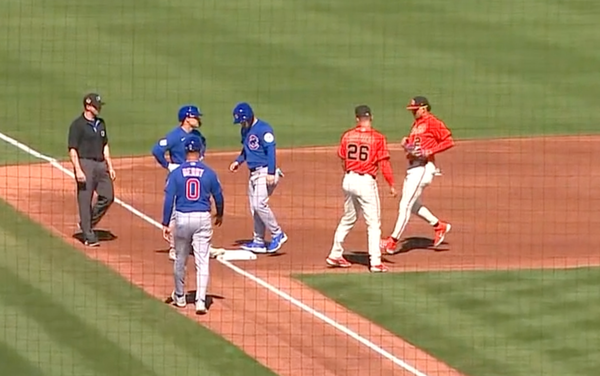
- Seranthony Domínguez was traded from the Baltimore Orioles to the Toronto Blue Jays … in the middle of a doubleheader between the Baltimore Orioles and the Toronto Blue Jays. To his credit, Domínguez managed to make the circumstances seem convenient — several cameras captured his commute as he walked from one clubhouse to the other — and not awkward. Even when he had to walk past his former bullpen-mates in Blue Jays gear! Of course, there was a return for Domínguez in the trade, minor leaguer Juaron Watts-Brown. But don’t worry, the Double-A affiliates for both the Orioles and Jays were also playing each other so he didn’t have to go far either.
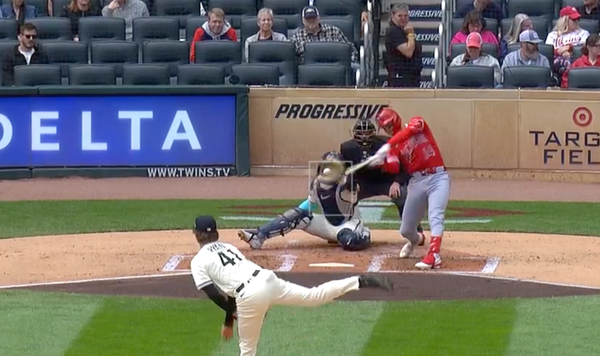
- Meanwhile, Jhoan Duran, the flamethrowing reliever for the Minnesota Twins, was not traded, despite being seen hugging his teammates in the bullpen mid-game Tuesday night. Those were hugs expressing either spontaneous affection (cute) or playful public trolling (good bit).
- Ronald Acuña Jr. is reportedly heading to the injured list with Achilles tightness. The Braves star left Tuesday night’s game and later told reporters he first felt the tightness Monday before lobbying to play in the next game. Everything is going wrong in Atlanta.
Are front office employees facing fan harassment?
A few weeks ago, I noted that the Washington Nationals had taken down their public-facing front office directory this season. I thought that was strange enough that I started periodically checking other teams at www.mlb.com/TEAMNAME/team/front-office and found a handful of other teams that didn’t have a directory listed either. By my accounting (a.k.a. Literally just searching each team), the ones that don’t have publicly available front office directories are: Nationals, A’s, Mariners, Angels, Reds, Diamondbacks.
After a little more digging, I found out that this was a cybersecurity measure taken in response to guidance provided by Major League Baseball to protect the front office employees. Apparently not all teams opted to adhere to the guidance, but some did.
Regardless of whether this degree of anonymization is effective, it seems notable to me that teams are concerned and the league is taking that concern seriously. Players have increasingly been speaking out about the abuse they, and their families, are getting — often as a direct effect of increased sports gambling. If front office employees are receiving even a fraction of that harassment, I understand the impulse to make it harder for aggrieved fans to find them.
And if that’s happening, I would like to report on it.
I’ve written in the past about the experience of front office employees when the season was suspended in 2020 — as they watched the league and the union squabble about how to restart, while feeling like their jobs hung in the balance. I’m happy to keep subjects anonymous. If you work for a team and have experienced any online abuse from fans or just have opinions about that/the security decision to take down front office directories, I would love to talk to you.
You can reach out to me at hrkeyser@gmail.com OR on Signal @ hrkeyser.09.
–Hannah Keyser
I wish I didn’t know now what I didn’t know then
How sports betting investigations around Luis L. Ortiz and Emmanuel Clase will affect fans
By Zach Crizer
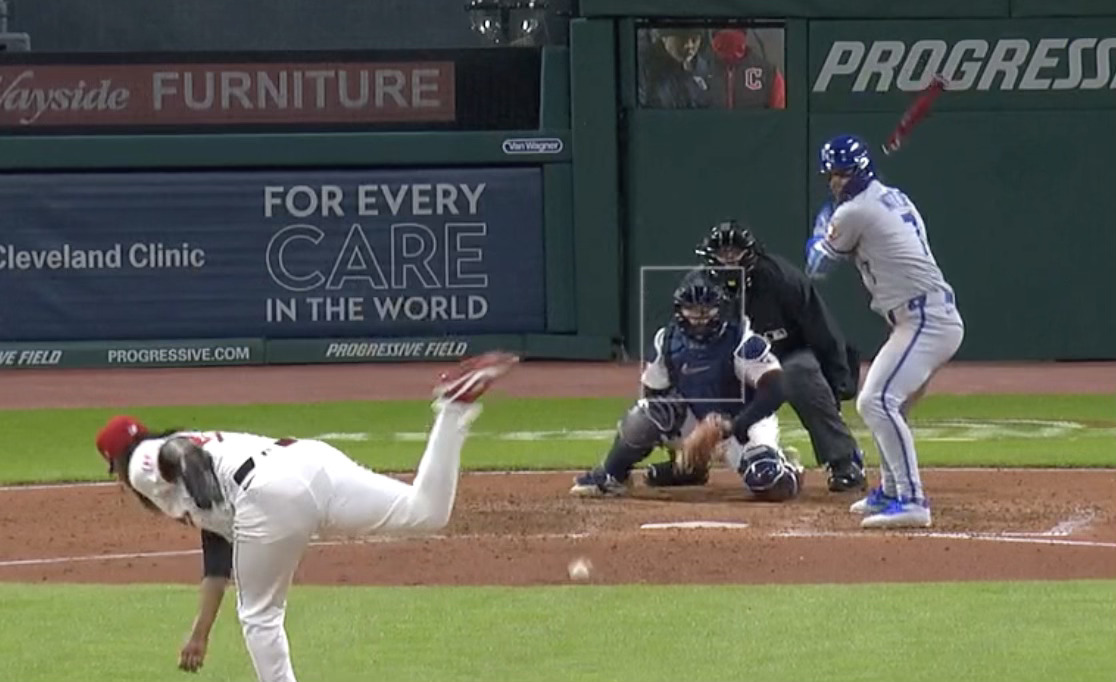
From 1989 until this month, a pitch chucked wide skittering to the backstop was occasion for one thing and one thing only: that familiar quip born of the late Bob Uecker’s star turn in Major League. “Juuuust a bit outside.”
On any given broadcast, that’s still what you’ll hear. But it might come with a nervous little undertone now. A comedy callback is no longer the only thought when a Cleveland pitcher uncorks a wild pitch. Now your brain must jump, for at least a microsecond, to microbets.
MLB placed Guardians starter Luis L. Ortiz on paid leave in early July as part of a sports betting investigation, and then did the same to star Guardians closer Emmanuel Clase in a jarring announcement this week.
Multiple reports have pinned down two pitches as the focus of the Ortiz investigation — in each case, first pitches of innings that missed the strike zone. ESPN reported a betting integrity firm called IC360 alerted sportsbooks about suspicious bets placed on those balls. The implication is that Ortiz intentionally missed the zone to ensure that prop bets placed on the first pitches of those innings being balls would cash.
There’s less firm information out there about any allegations against Clase, but the Cleveland Plain Dealer reported it’s “believed Clase is being investigated for influencing prop bets,” much like Ortiz.
This has already spawned the term “pitch fixing,” which effectively communicates a new era of smaller, more intricate gambling maneuvers that could cause big problems. The smartphone-based, instant nature of sports betting — legalized, heavily commercialized and regulated out in the open since a Supreme Court ruling in 2018 — is breeding a different type of scandal than the Pete Rose variety, the suspensions of several minor-leaguers or the lifetime ban of Tucupita Marcano for betting on baseball in 2024. Mirroring the NBA’s first major betting scandal of this new age, the Ortiz and Clase investigations highlight how players could gravely undermine the integrity of a game without placing a bet on anyone winning or losing.
And the first casualty, whether the Guardians pitchers are banned for life or totally cleared of wrongdoing, will be fans’ confidence in the purity of what they’re watching.
Unfortunately, I have seen the future, and it’s every pitcher who throws an occasional runaway slider being accused of pitch fixing by wannabe YouTube sleuths.
The information that can be presented or twisted to raise questions is everywhere. Each pitch is automatically quantified and spliced into individual shareable video files. All of the information, however, is also crucial for detecting and beating back threats from bad actors. A shadowy but high-tech cottage industry is monitoring legal betting activity and catching wagers that don’t look right.
Conversations about sports betting ricochet fast, so let’s get a couple things separated out.
- The original question of whether it’s a societal net positive for sports betting to be legal and regulated out in the open (as opposed to an underground black market) is very much up for debate. There are huge risks for addiction, not to mention the bad behaviors that follow the proliferation of sports betting.
- If it’s going to be legal, professional sports leagues like MLB have to work to stay ahead of the curve to protect the integrity of the games. That often means partnering with sportsbooks.
- MLB signing marketing deals with sportsbooks — obnoxious but inevitable — doesn’t absolve players or other professionals in the game when they break clearly defined rules, just as employees of the studios that produced The Wolf of Wall Street didn’t earn moral license to do securities fraud.
So, it’s a good sign that we know about this. Yet it feels bad to have conspiracy theory serum injected into the thing we watch to take a break from thinking about malcontents ginning up conspiracy theories to advance their own ends.
This could easily achieve omnipresent annoyance status just like the “MLB changed the ball” discourse that arises a couple times a season when a few fly balls don’t go quite as expected. It’s not wrong to think about it, because it has happened! Even as MLB publishes daily drag readings, it’s natural for some to wonder if the curious phenomenon they just witnessed, the one that perhaps just ruined their favorite team’s night, stems from something untoward or incompetent that would constitute an acceptable lightning rod for anger.
Checking the drag on the ball or calculating home run likelihoods are precursors to holding a digital magnifying glass over every wild pitch. By way of example, remember the red flag offerings from Ortiz? Here’s the more extreme miss.
There are 21 pitchers who have thrown a first pitch — with no outs and nobody on — tracked as being even “lower” than that spike (intentionally not telling you who they are!).
Two pitchers have thrown more than one, and one of those pitchers is Emmanuel Clase. It’s already easy to find people digging through every pitch that might fit the pattern with some faux authority and righteous indignation, even though they’re missing more than half of the equation.
It’s important that leagues and sportsbooks and their associated watchdogs track and investigate suspicious moments. Still, I know what I did when I saw that Clase news. I winced. Just like I will when the first pitch of an inning slips out of an innocent hand and clangs against the backstop.
I want to trust the universe and the powers that be to strike fear into would-be gamblers or prove the system so infallible that this is a short-lived concern. But even a one-off incident erodes the conversational ground beneath our feet for at least as long as you can store a purportedly incriminating screengrab. Which is to say forever.
We aren’t going to put this genie back in the bottle. It’s juuuust a bit outside.