#53 How do the Padres keep getting away with this?
Trades happened. React we must, so react we did
In 2021, I was at the postponed, pandemic-bubble Tokyo Olympics for the MLB trade deadline. This left Zach (hi, it’s Hannah) alone to handle the Nationals unloading almost everyone good less than two years after winning it all (among other things) while I wrote about volleyball DJs spinning for empty stands and whether the pre-tacked Japanese baseball was superior to what is used stateside (among other things).
This is, I’m sorry, my preferred way to cover the deadline.
I sometimes struggle to figure out how to add unique value to the baseball media landscape around the deadline. Especially in this forum; it doesn’t feel like our best use at The Bandwagon is to try to offer exhaustive evaluations of each deal. So we’re not going to do that! But we are going to react to the trades that we, well, have reactions to. Sometimes it’s nice to be your own boss.
First though, some top-line thoughts
Hannah: I was solo parenting for the entire afternoon and evening on Thursday which made the crush of transactions feel especially frenzied and overwhelming. For much of the final few hours my primary emotion was oh boy, I have a lot to catch up on. Except, that is, when the Astros re-acquired Carlos Correa from his beloved (or at least, they beloved him) Twins. As the dust settles I do think this is broadly true, but certainly that one deal convinced me that this deadline was more dynamic than I (and most experts?) expected going in. In the three-Wild Card era, the pre-deadline analysis has often been that there are too many teams lumped in the middle for there to be much action. But, credit to the GMs, that didn’t translate to every circa-.500 team standing pat stuck in a staring contest with one another. I liked Buster Posey’s unsentimental analysis of his one-game-under-.500 team’s play lately as just not good enough to justify adding. The relative parity in playoff odds has added an element of suspense pre-deadline and as long as a couple teams make definitive decisions which direction to ultimately go, the payoff is still pretty action-packed.
And yet, all that said, fewer big-name starting pitchers moved than I was anticipating1. In the lead up to the deadline, if you’re analyzing needs from the perspective of teams who are obvious buyers, “starting pitching” comes up a lot just by virtue of the fact that seemingly no team has enough healthy starters. As someone who has made regular appearances on the Mets’ television network over the past month-plus, I have been repeatedly tasked with considering how they could bolster a rotation that started strong and then seriously stumbled when depleted by injury. But they didn’t do that! Their guys are back off the IL and so instead they focused on improving the bullpen — just like most clear contenders. Even though holistically the inverse is true, it felt like teams made a bigger splash with the relievers than the starters this deadline.
At The Athletic, Will Sammon wrote about this phenomenon from the Mets’ perspective and landed on a couple of reasons why:
[T]he lack of availability of quality starting pitchers in the market, the prospect cost to get who was available, and the growing ability these days to win the World Series behind a strong bullpen.
The first two points are market-specific but the last one reflects an overall direction in the sport. Starting pitching is hugely important to the marathon that is the regular season. But once you get to October, pair even just a couple of strong starters with a lock-down bullpen and you’ve got a championship formula. Will we ever see a complete game in the World Series again?
The method (or at least the math) behind A.J. Preller’s madness
By Zach Crizer
The headline of deadline day was something to the effect of, “A.J. Preller is a madman.”
San Diego’s top executive loves to trade, and to trade big. Three years after the Juan Soto deal, Preller once again took center stage trying to bulk up a talented but top-heavy squad.
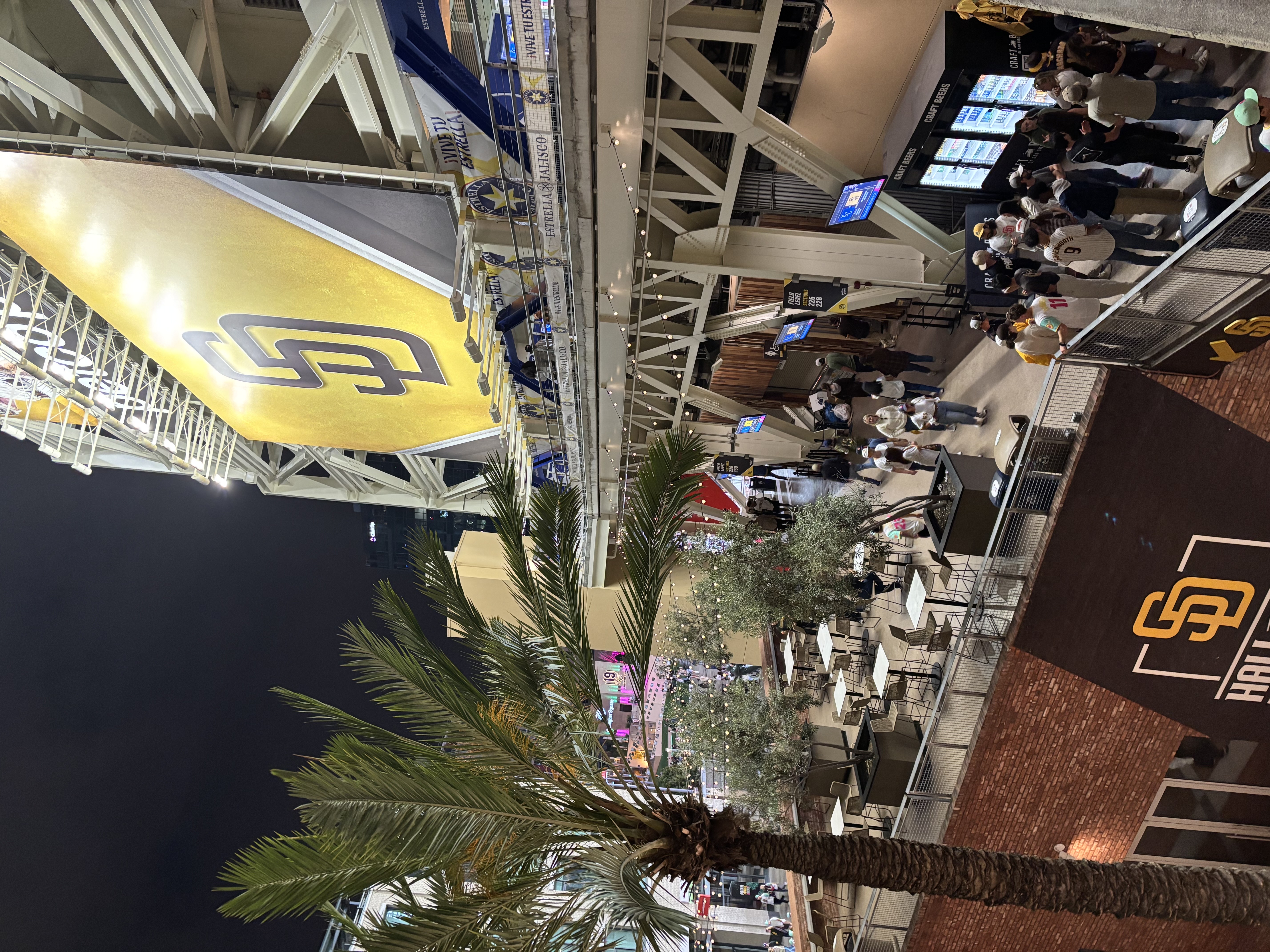
The deal that got everyone’s attention saw him ship out elite teenage shortstop prospect Leo De Vries and others to the A’s for controllable, fire-breathing closer Mason Miller and No. 4 starter type JP Sears. Preller proceeded to trade a small low-minors army to the Orioles for in-demand lineup boosts Ryan O’Hearn and Ramon Laureano, while resisting whatever urge (or ownership ask) might have sparked rumors that he would trade away Robert Suarez and/or Dylan Cease.
So at the end of the day, he had added by far the most significant haul of major-league talent without giving up any win-now players.
This extremely accurate-feeling post got me thinking about how Preller always manages to have the talent to get talent.
As the deals rolled in Thursday, I built a spreadsheet to try to understand the Padres’ whole deal. Are they capitalizing on other teams valuing prospects more than they do? Are they sacrificing the future for the instant bump of help right now? Is their deal-making more memorable than exceptional?
I took every hitter who has taken at least 200 plate appearances, and every pitcher who has thrown at least 40 innings (the 571 players you’ve seen the most in MLB this season, essentially), and looked at their original team — the club that first signed them.
It’s not a perfect parallel, but I essentially wanted to see who has unearthed the most talent, based on a current snapshot of the majors, and who has scattered it around to other clubs. Don’t forget, before Preller assumed his current perch as the most closely related search term to “blockbuster” other than “bankruptcy,” he was renowned for his international scouting acumen as an assistant GM building up the early 2010s Texas Rangers.
The Padres are certainly in the upper echelon when it comes to finding future major leaguers. They originally signed 22 of the current group of regulars, tied for fifth-most behind the Dodgers (30), Astros, Cardinals and Yankees (23 each).
Players who originally signed as Padres — a list that includes Trea Turner, James Wood and Max Fried, among others — have produced almost 32 WAR in 2025, 3rd-most behind the Dodgers and Astros. But here’s where the Padres are notable: Only 16% of the 2025 production from original Padres has come for the actual Padres, the lowest percentage of any franchise. For reference, the median MLB team is still reaping 47.5% of the benefits from the current big leaguers it signed, and no other team in playoff contention is below the Cubs’ 29.7%.
This isn’t scientific proof of anything, but it gets at the feeling you might be having. Yes, Preller’s Padres deal boldly, both willing to believe this might be their moment right now, and that they are already restocking the young players to meet their next moment.
You can quibble with the execution, with his frequent stars and scrubs roster construction, with whether the player development apparatus gets the most out of the raw ability on hand. But on the central gambit? On the question of whether they can get their guy, and then come back to get the next guy, all while fielding an entertaining and competitive team? So far, Preller has repeatedly answered that in the affirmative.
Trade bits
⚾⚾⚾⚾⚾⚾⚾⚾⚾⚾⚾⚾⚾⚾⚾
The very first thing I wrote here at The Bandwagon was about Jerry Dipoto’s comments that seemed to condescend to Mariners fans who felt he should have been more aggressive in the offseason. I granted that his measured, methodical approach to sustained intentional mediocrity was rooted in reason, but that he should be more empathetic to a fanbase that longed for a little urgency.
Now, they have a surprise MVP contender to pair with their predictably strong — although perhaps not as dominant as expected — pitching staff and so they are seizing the season by acquiring Eugenio Suarez (and Josh Naylor) as an upgrade around Cal in the lineup. This is good. It’s easy to like a trade that adds a 143 wRC+ guy, and this specific 143 wRC+ guy was also already a beloved member of the Mariners clubhouse. The Astros have to take a step back at some point (right???) and a season in which they are especially injury-plagued is a good time to try to overtake them in the standings — or at least outlast them in October.
And while this is true…