#60 Search party seeks explanation for Brewers
Highlighting the best findings about baseball's best team. Plus: Will Smith, and a bat-throwing incident
The Opener
- The Brewers lost. After a franchise-high 14-straight wins, it looked fated for a 15th when William Contreras homered in the ninth to put the Brewers up 2-1, but the Reds scored in the bottom of the ninth and tenth to remain the only team that hasn’t been swept this season (quick q: do we care?). Even with the streak over, there’s a lot of well-deserved marveling about Milwaukee to go around. See below!
- Zack Wheeler — who has been the most valuable pitcher in baseball since he joined the Phillies in 2020, and leads arguably the best rotation in baseball in Philadelphia — has hit the injured list with an “upper extremity blood clot”. There is no timeline yet on his return and no definitive plan for treatment. It is just the second time in eight seasons that Wheeler has spent time on the IL.
- More unfortunate injury news: Red Sox rookie Marcelo Mayer will have season-ending surgery on his wrist, which has sidelined him since late July.
How, why and the Brewers
by Zach Crizer
In every hurriedly produced Netflix documentary about every mysterious missing person or unsolved murder, there’s a scene where absolutely everyone you’ve seen on screen so far is lined up side by side in a big open field, searching together. Police, dogs, local officials, family members, everybody — eyes trained on the dirt, looking for anything.
So if you’ve seen that oft-repeated tableau, you’ve got the gist of baseball reporters’ lives the past few weeks as roughly half of them were assigned the task of explicating the Milwaukee Brewers. Now owners of baseball’s best record, the Brewers are 39-10 over the past two months with separate winning streaks of 11 and 14 games, the latter of which ended Sunday.
This team has a reputation. It mints and exports stars and managers and executives, only to import a bunch of boxes labeled “some assembly required” and win anyway.
“At this point in the season,” Andy McCullough wrote for The Athletic, “outsiders tend to get dispatched to explain how the team — residents of baseball’s smallest market, financed by a payroll in the sport’s bottom third — are doing it again.”
But this latest streak, spiked with even more anonymity and apparent inevitability than usual, escalated the nearly annual summer realization that the Brewers are good into a national quest to comprehend really anything about how or why they are this good.
Having been on both sides of this — assigning these stories, attempting these stories — I can tell you it’s not exactly the most enjoyable thing to pursue an answer that will be incomplete at best, then try to write your findings in a way that might stand out while every other sports publication with bandwidth on the American internet is paying someone with the exact same mission. Yet if you have the time to sift through all the evidence that surfaces, these all-hands-on-deck moments can turn up some fantastic nuggets.
So today, I’m not going to try to explain the Brewers. I’m going to highlight my favorite chunks of why and how dug up by the reporters and analysts looking into the mystery.
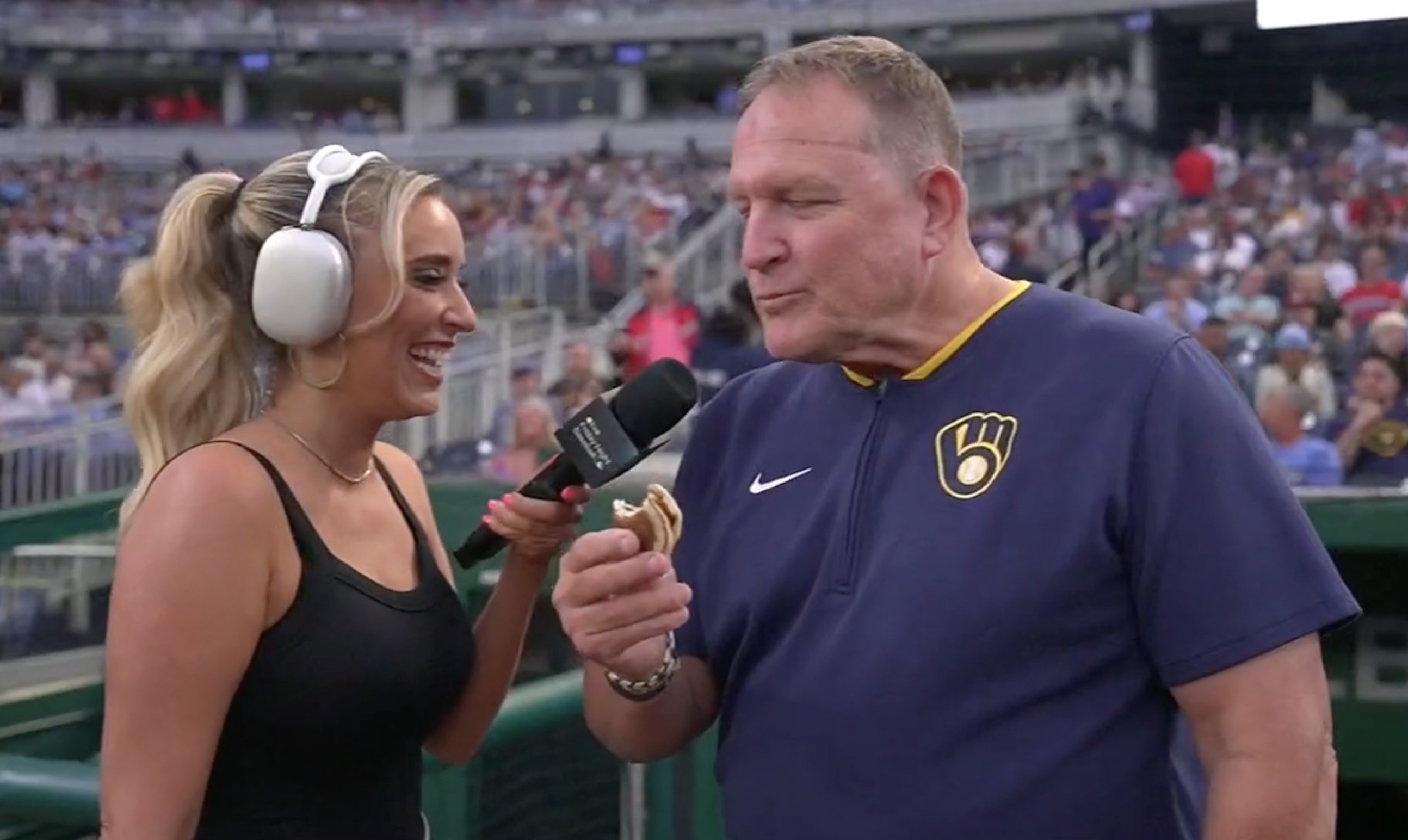
- Anything is possible when you’re hungry.
The skipper who keeps pancakes (and other snacks) in his pocket during games is going to accidentally spur a complete reimagining of what “managing with your gut” means.
Pat Murphy was a decorated manager at the college ranks who made the jump to the pros, was passed over for a permanent gig after a stint as the interim manager of the Padres, then served as Craig Counsell’s bench coach for years. When Counsell departed for Chicago, Murphy was elevated.
He is simultaneously a gruff baseball lifer and a wide open well of expertly marshaled emotion. “Murphy is a man driven by doubts, real or invented,” Cody Stavenhagen wrote in a superb 2024 profile. That makes Murph, as they call him, the central voice in so many stories that try to get at the heart of the Brewers’ eyebrow-raising dominance. You get the sense that Murphy views the external surprise as fuel for the success.
"These guys have been told they can’t do it their whole lives, most of them," Murphy told Rowan Kavner FOX Sports.
A huge swath of the club can embrace the understudy ethos, from GM Matt Arnold (promoted when David Stearns stepped down) to Isaac Collins, the 27-year-old once plucked from the Rockies in the minor-league Rule 5 draft who got a shot in left field thanks to spring training injuries and might win Rookie of the Year.
"We’re just really fortunate that these guys are jelling and coming together and playing hungry," Murphy said. "Play hungry, and anything’s possible.”
- One man’s trash …
At MLB.com, Mike Petriello posits, with backing data, that Milwaukee’s recurring role as conquerer of expectations stems from “the ability to identify some lesser-loved talent and polish it into diamonds.”
“The Brewers, contrary to what you may think about the way a smaller-market team needs to compete, aren’t really ‘homegrown,’ at least not in the way most people consider that phrase,” he writes. “On the current 26-man roster, the Brewers have a mere five drafted-and-developed players, which is tied for fourth-fewest.”
Put another way: The Brewers are open for business pretty much all the time. Quiet at the trade deadline, they had scooped up key contributors much earlier. After an April pitching debacle, they flipped a prospect to the Red Sox for Quinn Priester, a former top prospect starter who had entered the journeyman spin cycle. He has a 3.48 ERA in 124 innings. When the pitching swung the other way to a surplus, they turned an Aaron Civale trade request into flailing former No. 3 pick Andrew Vaughn, who had been demoted to Triple-A by the White Sox. He’s batting .327 with nine homers in 31 games with the Brewers.
- The Brewers’ internal data system is known as The Keg.
Where does evidence in favor of these acquisitions come from? Something called The Keg.
And even alumni like Ryan Braun revere its powers. Here’s Braun talking to Bob Nightengale at USA Today: “Our front office is at the forefront of innovative innovations. You see the way they optimize roster construction, the strengths of the team, and take advantage of all the nooks and crannies of their home ballpark. They really have a unique proprietary data system. It helps identify undervalued assets.’’
The “forefront of innovative innovations” sounds like a hokey James Bond villain talking about an AI company but hey. Nightengale then goes on to make a grand prescriptive statement: “It’s the reason why the Brewers can let baseball operations president David Stearns depart for a $10 million salary with the New York Mets, manager Craig Counsell bolt for an $8 million salary with the Cubs, simply promote Matt Arnold in the front office, Murphy to the manager’s seat, and still remain a power.”
- Specific, brutal honesty
This is a feel-good story, but the most striking quote I read about the Brewers recently came from Christian Yelich, the former MVP and the highest-paid player in this clubhouse.
“It’s professional baseball, at the end of the day,” Yelich told McCullough at The Athletic. “I think people lose sight of that sometimes. Like, wanting it to be like, ‘Oh, you’re doing great and it’s OK.’ Sometimes, it’s not OK. It’s the big leagues. There’s a league for other s—, and it’s not this one.”
There are lots of mentions of identity, of being who you are, and what that really means I think is buying into an effective communication strategy that mandates players play up their strengths and whittle down their weaknesses.
New arrivals like Priester and Vaughn don’t speak in platitudes about their improvement in Milwaukee. They rattle off clear, concise instructions that say, to me, that a lot of teams are not providing guidance that’s clear enough to be retained and relayed to reporters.
Priester was told to focus on locating his sinker down and away, and his cutter for back-door strikes, McCullough reports. “When Vaughn received his promotion, the staff provided marching orders, just as they did for Priester,” he writes. “If he did not swing at strikes, he would not stick around. The message left little room for interpretation, which is one of Murphy’s hallmarks.”
Add players who can be better. Help them get better. Show them how to stay hungry to keep getting better.
It’s not exactly a trade secret to be locked in a vault, but when the book is written on the Brewers in three, five or 10 years, it’s going to be in there somewhere.
The Bullpen
⚾⚾⚾⚾⚾⚾⚾⚾⚾⚾⚾⚾⚾⚾⚾
Uh, so Victor Robles threw a bat at a minor-league pitcher last night.