#61 What's it like to work in baseball, and to walk away
A Q&A with a former front office employee
The Opener
- Diamondbacks star Ketel Marte publicly apologized for taking days off after the All-Star Game, which apparently became necessary because of complaints and/or resentment within the team that surfaced in a story in the Arizona Republic. At the time, we mentioned Marte’s absence following a burglary at his home, but apparently there was a feeling among teammates that Marte “is a great player … when he wants to be.” Others, including shortstop Geraldo Perdomo, publicly stood up for Marte. Kind of a yikes all around for Arizona.
- Rehabbing Mariners outfielder Victor Robles was suspended 10 games for the bat-throwing incident mentioned in Monday’s newsletter.
- The Cubs swept a doubleheader from the Brewers, even while holding a severely slumping Kyle Tucker out of the lineup for a mental reset.
Leaving the dream job: Kiri Oler on quitting baseball
by Hannah Keyser
Kiri Oler had double majored in math and English, obtained a masters of science in cybersecurity, worked for a federally funded research lab, and taught college math when she presented at SABR seminar. Her research there focused on using modeling to predict when players would need rest, before their performance suffered. Teams in attendance took note, and she started interviewing for jobs in a front office.
Growing up, Oler had consumed baseball passively; preferring to read a book at the ballpark while her brother played, her dad coached, and her mom kept score. Back then, sports as a career path were for athletes and coaches, not something she’d considered. But in Baltimore for grad school, she started attending Orioles games of her own volition, developed a fandom, and realized the research techniques she learned in cybersecurity applied well to baseball.
“It wasn't really the dream,” she says of working in baseball, “but sort of evolved into the dream eventually.”
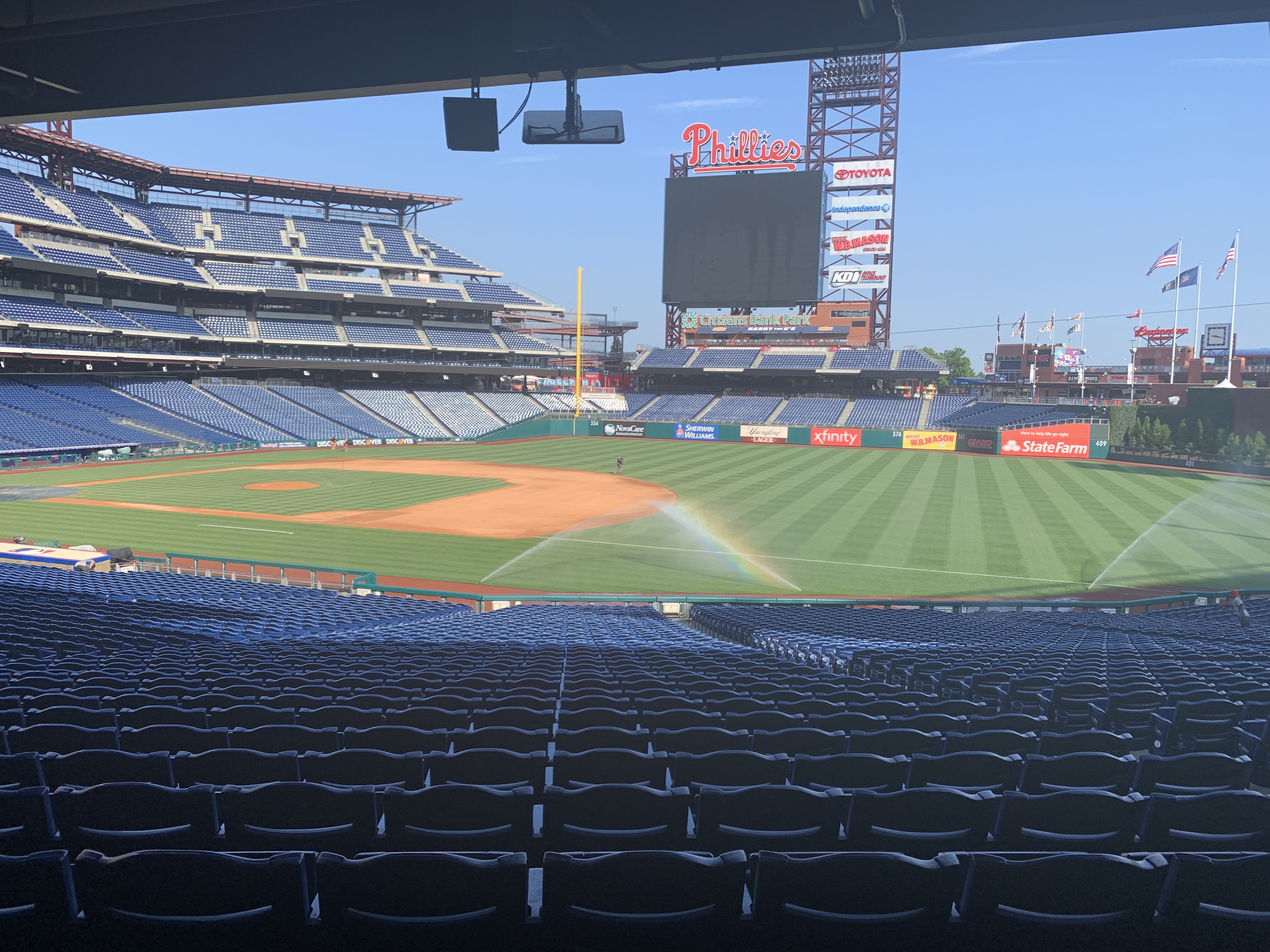
After a yearlong fellowship with the Twins, Oler ended up working as a quantitative analyst for the Phillies research and development department from 2019 through 2022.
Then she left.
Now, Oler works as a data scientist for PlayStation, working on MLB The Show. “I found a way to still do baseball, but in a little different environment,” she says.
I wanted to talk to Oler about walking away from a front office job — how and why she came to that decision and the perspective she has now about. We’ll start with when she got the full-time job with the Phillies.
This interview has been lightly edited and condensed.
Hannah: What was it like when you got the offer from the Phillies?
KO: The director of R&D at the time called me and made the offer. I asked them about timeline, and I think they gave me about a week. And what was funny is I was actually in the preliminary process of talking to the Dodgers about a job. And so when I told them I had an offer, they had to hurry up and condense that whole application process down to a one-week window. So they flew me out and did the whole thing within a matter of days, and made me an offer the day before I had to let the Phillies know. So I spent a few hours sitting in LAX deciding which of these jobs that I wanted to take.
Why the Phillies? You had other offers. So was it the role? Was it the organization? How were you evaluating these jobs at the same time as they were evaluating you?
KO: There were a few different factors I was considering. A lot of it had to do with the size of the departments. The Dodgers’ whole operation is pretty well fleshed out. So if you're joining the Dodgers on a more junior level, I feel like you are just a little bit more of a cog in their overall machine. And there can be pros to that. Like, you can learn a lot in that environment. Obviously there are a lot of really great, smart people there that you can learn from.
Whereas the Phillies were a little bit of a newer R&D department. I think they were actually the last team to add an R&D department1. And they ramped up fairly quickly, so they were by no means the smallest by the time I was interviewing with them, but it just seemed like there would be more of an opportunity to, like, have an impact faster by being over there.
What's something that you're especially proud of from your time working in the Phillies front office?