#62 The most dangerous part of velocity training for kids is that it works
Bonus content from Hannah's New York Times feature. Plus: TV deals, Kyle Tucker and The Password
The Opener
- Details are starting to coalesce around MLB’s TV deal negotiations. The Wall Street Journal reports NBC and Peacock could be the new home of Sunday Night Baseball, and Netflix the “broadcaster” of the Home Run Derby. Perhaps more notably, The Athletic reports MLB is in talks with ESPN that would see MLB.TV — the streaming service that hosts all out-of-market games and now some in-market games — folded into ESPN’s offering. That would be a seismic change, and it’s not yet clear exactly how it would work.
- A day after Ken Rosenthal quoted manager Alex Cora saying rookie star Roman Anthony reminds him of “[Juan] Soto, without the flashiness, early on,” the steady 21-year-old Red Sox linchpin delivered a key homer (and batflip) to help Boston beat the Yankees.
- It’s a big week for prospect call-ups. Pirates pitcher Bubba Chandler and Rays shortstop Carson Williams are now joining Orioles catcher Samuel Basallo in the majors, elevating three of the top 18 prospects from Baseball Prospectus’s Midseason Top 50.
The paradox and pitfalls of parenting a young pitcher these days
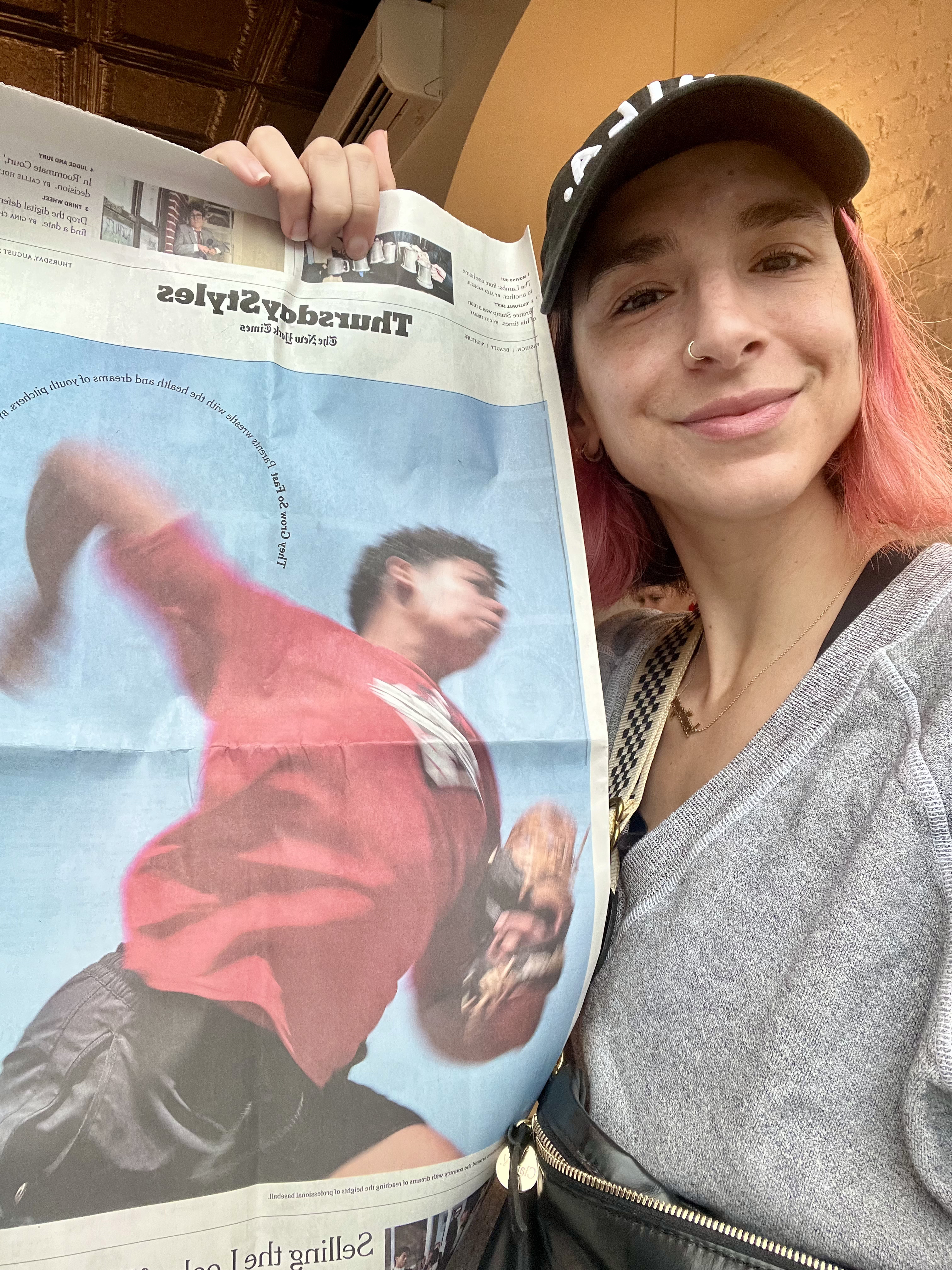
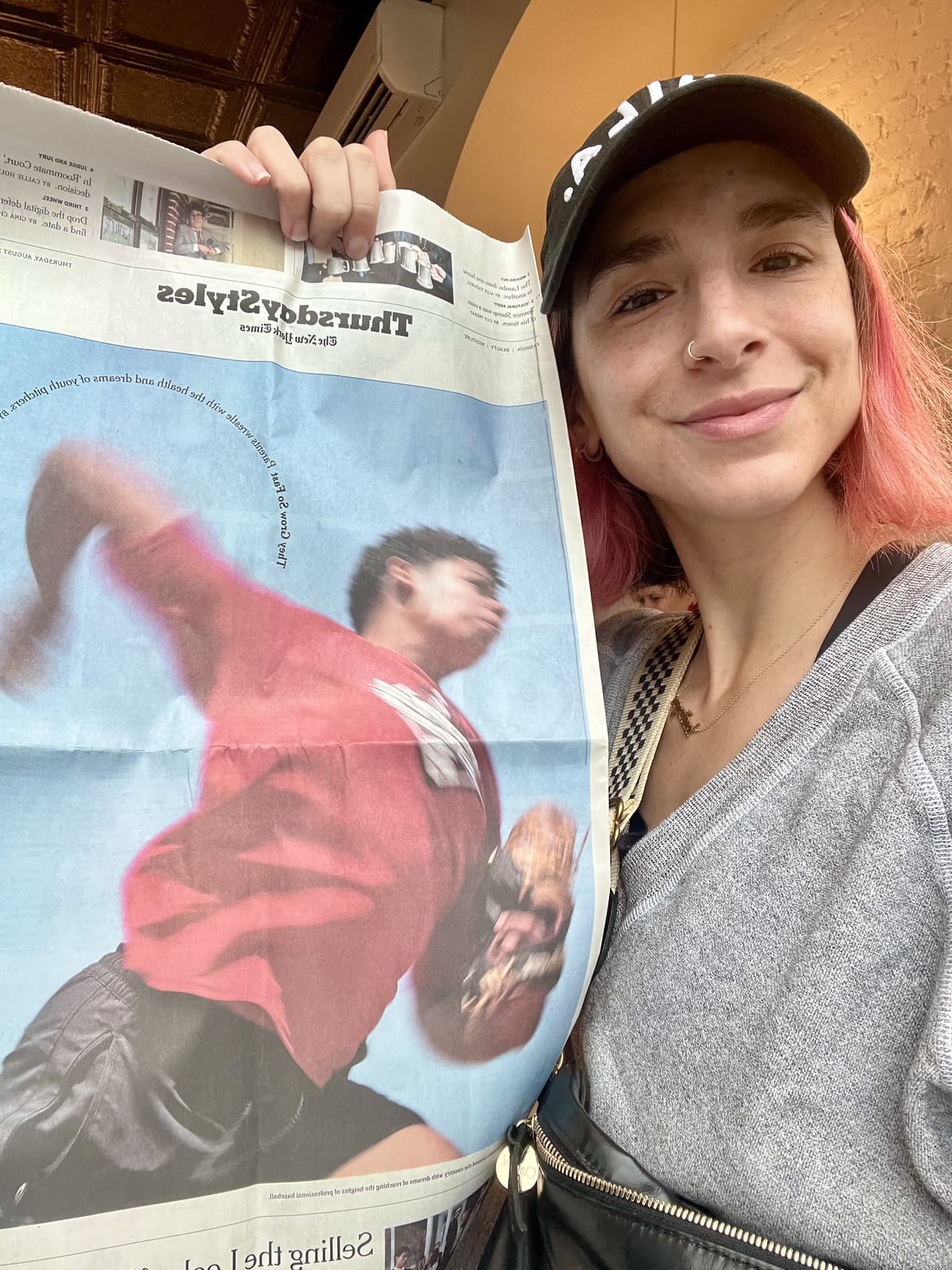
My first byline in the New York Times was published yesterday. If you’ve been reading this space for a while, you’ve probably seen me hint at it over the past few months.
The story is about the pressure young pitchers and their parents feel to pursue sophisticated velocity training. I wanted to approach this situation sympathetically. I think oftentimes, older generations of pitchers — perhaps from the pulpit of the broadcast booth — will opine about how they didn’t bother with any of this optimization or even specialization, they simply sandlotted their way to the big leagues. And plenty of fans adhere to this line of thinking as well, or else they’re understandably skeptical of any parent who puts too much stock in a child’s athletic development. I get all that, and I certainly don’t think that the current ecosystem in youth sports is healthy. But also, I see the paradox.
As I wrote in the piece:
It can be easy to criticize parents who participate — or even just let their children participate — in the increasing professionalization and optimization of youth pitching. But the incentive would exist even if any one individual chose not to engage. In some ways, the most dangerous part about programs designed to help youth pitchers throw harder is that they work.
My interest in this topic was (duh) informed by becoming a parent. My son is only a year old and already I notice the powerful hunger I have to help him reach his full potential, which is matched only by the almost blinding biological need to keep him safe. If there was an overarching conclusion from my reporting it’s that parents whose sons do engage in some amount of velocity-specific training try to make peace with the risks through control. As I wrote, “They talk to experts, do their own research, and then they land on a plan that they have to believe will keep their son off the operating table.”
No one makes this more extreme or explicit than Deven Morgan, who became the director of youth programming at Driveline after his son, Danny, started training there.
In a quote that didn’t make the final cut, Deven told me: “You could very much make the argument that I created that program just so that he had a place that was not going to make it more likely that he was going to get injured.”
Contrast that with what Dr. Brandon Erickson, who has worked for a number of major league teams and consults on MLB’s Pitch Smart Guidelines, said in the piece: “The harder you throw, the more likely you are to have a Tommy John. It’s not a preventable problem, is what I’ve learned over the last 15 years.”
When I shared the story on Twitter, someone replied echoing the generational misunderstanding I referenced above. Rather than send kids to pro-level pitching labs, parents these days could “teach what Nolan Ryan & Justin Verlander and others were taught.”
It just so happens that Justin Verlander was one of the first people I spoke to for this story. He was in a rush when I stopped him but I insisted it would only take a minute. Then I explained the premise.
“How are you going to give me one minute and then ask a question like that?” he said (good-naturedly!).
Verlander had a lot of sympathy for the pressure on young pitchers today, although ultimately none of his quotes ended up in the story.
“I’m not envious,” he told me, “I don’t know what I would do. I’m so thankful that this wasn't around when I was a kid, because my parents really didn't know anything about baseball and I surely would have been sent to one of those places, and, inevitably, I don't know what would have happened.”
There was one part of his experience, though, that’s probably relatable to most sport parents: his interest in baseball forced his dad to undertake something of a crash course just to keep up with his son’s practice.
“My dad was reading ‘How to Pitch For Dummies’ books — literally, went to the library,” Verlander said, “like, that's where I began.”
I worked on this story for so long and I care deeply about the subject — from the broad topic of youth sports to the individuals who were willing to let me into their lives a little bit — so I would love it if you gave it a read. Here’s a gift link if you’re so inclined.
–Hannah Keyser
The Bullpen
⚾⚾⚾⚾⚾⚾⚾⚾⚾⚾⚾⚾⚾⚾⚾
So, Cubs star Kyle Tucker has been in a brutal slump. Since the All-Star break, he is running a .182/.333/.239 line with just one homer. The Cubs gave him two days (and three games) off, and went 3-0 against the Brewers.
In the meantime, ESPN’s Jesse Rogers reported that Tucker suffered a fractured hand in early June and played through it. This would be a better smoking gun for the blockbuster trade acquisition’s poor performance if he didn’t bat .311/.404/.578 in June, immediately after the injury.
There’s never a good answer for these things. You can be mad at Tucker and/or the Cubs for hurting the team by playing through injury. Or you could be impressed that he played through it. As Craig Goldstein pointed out …
… the rival Brewers have had catcher William Contreras playing through a broken finger most of the season, with depressed numbers to boot, and their success has staved off any furor.
Tucker returned to the lineup Thursday and went 0-for-4 with a walk. The Cubs lost to the Brewers. –ZC
⚾⚾⚾⚾⚾⚾⚾⚾⚾⚾⚾⚾⚾⚾⚾
Don’t look now but the Rockies’ win percentage is creeping awfully close to .300!