#73 Rest for arms young and old
Why the 'dead period' is encouraging. Plus: Clayton Kershaw retires, older pitchers press on
The Opener
- The Chicago Cubs clinched a postseason berth. It’ll be their first playoff appearance since 2020, their first playoff appearance in front of fans since 2018. They’ve fallen off since they were one of the best teams in baseball around Memorial Day, but I thought this detail captured their consistency well — “the Cubs have not had a losing streak longer than three games all year” — and that this sums up the October expectations: “The Cubs (88-64) are somewhere above ‘happy to be here’ and below ‘team of destiny.’”
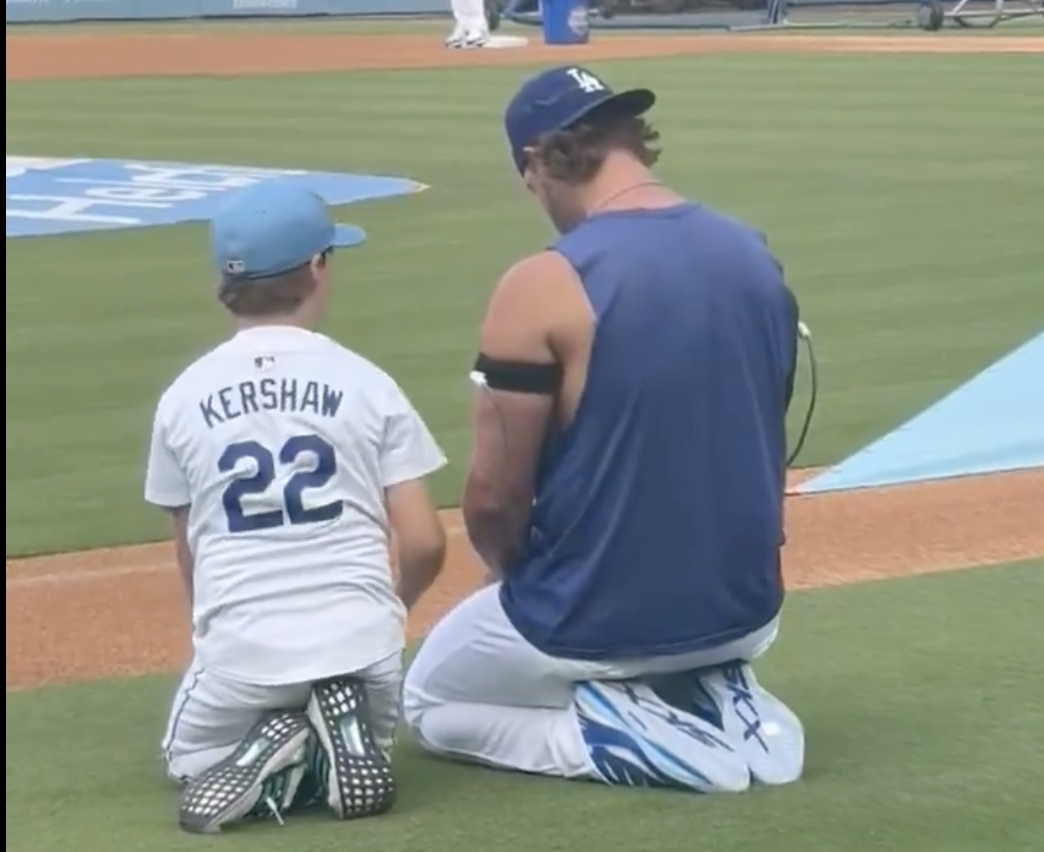
- The Los Angeles Dodgers announced on Thursday that, after 18 years with the team, Clayton Kershaw will retire after the 2025 season. Since getting drafted by the Dodgers in 2006, Kershaw has never been on another team. Earning three Cy Young Awards, an MVP, and two World Series rings in LA. His last regular season start at Dodger Stadium is tonight and his Hall of Fame induction is in 2031.
- The Minnesota Twins let go of four of their five pro scouts, in what a source described to The Athletic as a “cost-cutting measure.” The one remaining scout will work with other pro personnel on video scouting. This isn’t an unprecedented move. In recent years, other teams like the Cubs and Astros, have deprioritized or eliminated entirely in-person scouting in favor of the more economical video approach.
When I wrote about the pressures on youth pitchers to train at a dangerously high level for the New York Times, I didn’t get into the issue of throwing max effort year round explicitly. It was for a general audience and so that aspect was just sort of wrapped up in single-sport specialization happening at an earlier age. Over the course of reporting out that story, however, concerns about constant training came up repeatedly.
Dr. Brandon Erickson, who has worked with several teams and serves on MLB’s Pitch Smart advisory committee, referenced a study he’d done that showed major league pitchers from warm-weather states — where they’re more likely to have thrown through the winter as kids — tended to have Tommy John surgeries earlier in their careers. He actually cautioned that such a study likely was out of date specifically because now kids everywhere train year-round — they just do it indoors if it’s cold out.
Rays pitching coach Kyle Snyder also cited the lack of downtime in the schedule as an issue plaguing young pitchers today.
“These kids are starting to play baseball exclusively at the age of 11,” Snyder said.
“So it's kind of a two-fold issue where they play all four seasons of a year, so it’s tough to really manage the workload, while at the same time they're trying to improve and get noticed. And the biggest thing that's required for an amateur pitcher to get noticed is velocity.”
In short: “There's a certain amount of mileage that the elbow can take before it fails,” Dr. Erickson told me.
These are concerns from professionals about what’s happening in the amateur space. And so it was really interesting — and heartening! — to see MLB take action to change the incentive structure that exists outside their direct authority.
As Baseball America, along other outlets, reported on Thursday, MLB circulated a memo to all 30 teams this week announcing a “dead period” during the fall and winter during which amateur players cannot be monitored in any way.
From Oct. 15 to Jan. 15 for high school players, and from Nov. 15 to Jan. 15 for college players (with some exceptions grandfathered in), MLB personnel are not allowed to scout or evaluate video/data on amateur players.
The intent, according to BA’s obtained memo, is to “reduce the incentive for amateur players to perform at maximum effort year-round.”
"MLB encourages players to use this period for rest, recovery and training for next season, rather than for high-intensity, maximum-effort activities," the memo says, according to ESPN.
The policy is an explicit response to the sweeping report MLB issued last offseason on the dire state of pitching injuries at all levels of baseball.
I’m inclined to be cynical about MLB and teams tut-tutting the increasingly early professionalization of amateur baseball. In fact, that’s part of why I did the Times piece. The discourse had started to feel a little victim-blamey in the way people around the game decried kids prioritizing Stuff over Fundamentals or even Fun — becoming “throwers” and not “pitchers,” is a common critique. But of course, MLB sets the agenda for baseball aspirants. The fucked up dynamic is a direct response to what teams have indicated they value in potential prospects.
Which is why I appreciate that this approach actively takes responsibility for MLB’s role in directing amateur behavior. I’m interested if people who know more about this than I do see any cause for concern. But, as far as I can tell, the issues are just that MLB can only do so much in terms of scope and enforcement. The league can’t actually dictate that kids take the winter off, can’t require agents to adhere to the same dead period, and the mechanism for monitoring compliance seems to rely on self reporting. But, in theory, this seems good.
— Hannah Keyser
The Bullpen
⚾⚾⚾⚾⚾⚾⚾⚾⚾⚾⚾⚾⚾⚾⚾
Shout out to Marc Normandin for this Bluesky post:
Future Hall of Famer with an ERA under 4 is hardly the funnest of facts but this one stopped me in my tracks and sent me right to Baseball Reference. I knew that Justin Verlander had bounced back since starting the season with 16-straight winless outings (after finishing last year with a nearly five-and-a-half ERA just two seasons removed from his improbable Cy Young win). But I hadn’t realized he’d gotten good again. Verlander finally broke through with his first win of the season on July 23. Granted, wins are not a meaningful stat unless something aberrant is happening, but 16 starts to open the season without a win clears that bar. He entered that game with 4.99 ERA. Since then, he’s made 12 starts at a 2.63 ERA. So far in September, he’s made three starts: six innings, zero runs allowed; seven innings, one run allowed; seven innings, zero runs allowed.
Is it even remotely likely? Absolutely not. But as of right now, it is not entirely out of the realm of possibility that Verlander (42 years old) could face off against Max Scherzer (41 years old) in the World Series. Much more likely? A 43-year-old Justin Verlander is going to be back, pitching somewhere, in 2026. –HK
⚾⚾⚾⚾⚾⚾⚾⚾⚾⚾⚾⚾⚾⚾⚾
I had been sensing some sort of old pitcher renaissance in the air recently, so this gave me a chance to check that instinct.