Keep Slides Weird

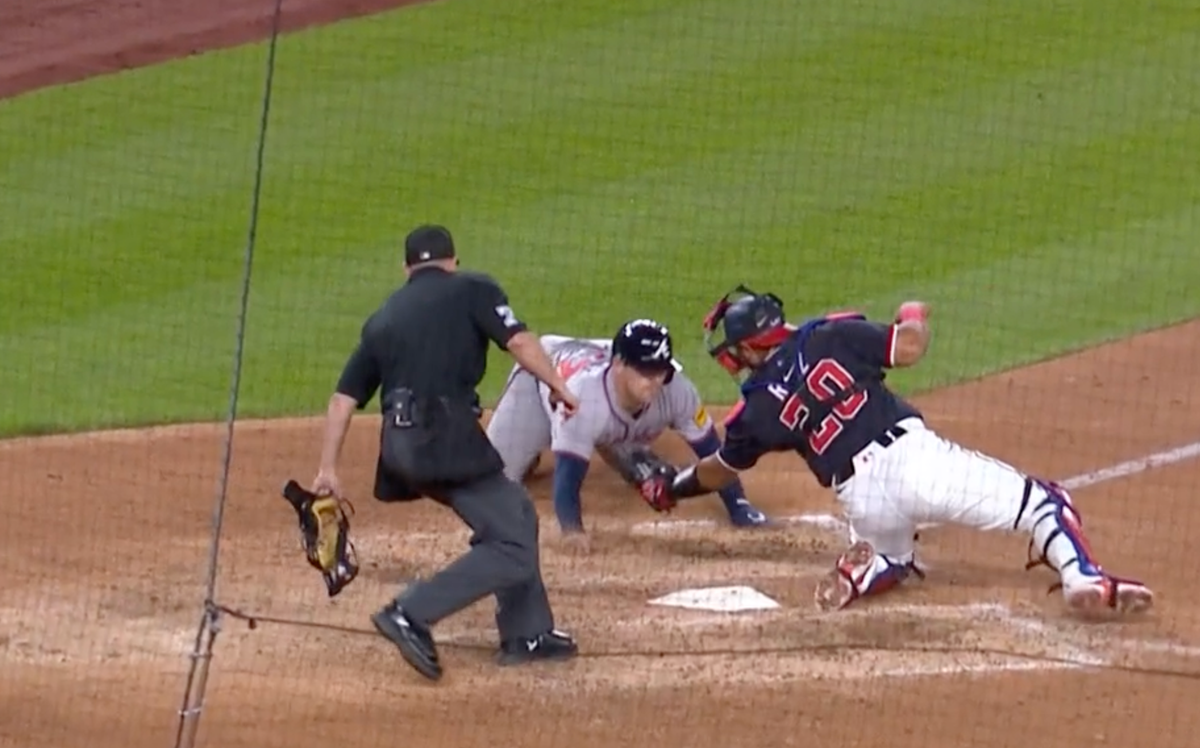
Somewhere around the summer of 2023, I developed a nagging feeling that the slides in Major League Baseball games were better.
By better, I didn’t mean cleaner or more fundamentally sound, but I recognize that was the most obvious way to understand the hypothesis. And by that reading, it was pretty universally dismissed as wrong. After enough raised eyebrows and blank looks, I started phrasing the question in a way that didn’t besmirch my own baseball-watching credibility: “Do you think slides have gotten better or worse?”
I remember asking one team’s TV play-by-play announcer, while chatting in a clubhouse, and getting a response he found self-evident: “Oh, definitely worse.”
That was the first summer of the pitch clock. Ronald Acuña Jr. was in the middle of stealing 73 bases. Trea Turner was on his way to swiping 30 without being caught. A lot more running and sliding was on display, but that meant the rules received mental credit for the additional success while the memorable sputtering over-slide or bonehead moment got debited from the players’ running acumen.
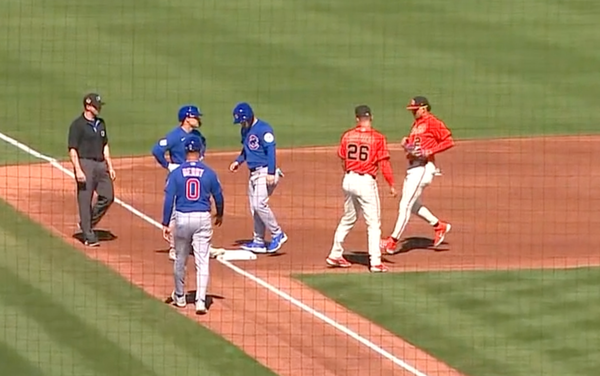
I felt convinced, but daunted by the task of proving anything. During the 2025 season, there were a series of memorable glove-dodging slides that reanimated the mission. There was the Chase Meidroth hesitation move. There was the Ryan Fitzgerald emergency swim move. And there was the Mickey Moniak pop-up, around-the-world dodge.
He was safe on review.
A more specific version of my theory crystallized: Today’s slides are more athletic, more evasive and more adaptive than the ones we saw in MLB even 10 years ago. They are better and more interesting. Or, at the very least, more interesting in the pursuit of being better.
⚾⚾⚾
There are decipherable, structural reasons for the evolution of the slide. I’d broadly break down the major-league runner’s attitude toward a ball approaching or reaching a fielder’s glove into four admittedly squishy modern eras:
1970s to 1995ish: 'Amazing, violence is now legal'
Why try to avoid the tag when you could obliterate the fielder and dislodge the ball? Chalk that one up to Pete Rose.
1995ish to 2013: 'Is this when the unwritten rules say I’m supposed to go into football mode?'
A kinder, gentler, more injury-avoidant approach definitely took hold somewhere along the line, though I’m certainly not confident in the demarcation.
2014 to 2015: 'Ugh, this tag might hurt'
A lot of things happened ahead of 2014. MLB instituted both expanded instant replay challenges of tag plays and the Buster Posey rule limiting collisions at home plate. The odd ripple effect: Harder tags, as fielders adapted quickly to the realization that the laissez-faire swipe tag wasn’t going to cut it anymore. “There’s a lot of guys you just wanted to get the tag in and get the hell out of the way," infielder Jordy Mercer explained at the time. “But now you got to get in there and just kind of get nasty with it.”
2016 to present: 'Close-quarters dodgeball time'
In the 2015 postseason, the Chase Utley slide happened. In 2016, MLB banned runners from going out of their way to clobber fielders beyond home plate. That was more applicable to force plays than tag plays, but the knock-on effect was unquestionably a more finesse approach to baserunning.
Help fans fan smarter. Keep The Bandwagon free to read
Shortly thereafter, Javy Báez became everyone’s favorite highlight creator. His magical slides, mostly of the swim move variety where he pulled back the hand most likely to be tagged, were definitely a thing by 2018. They got their own dedicated YouTube reel in 2019. Shifty former Pirates infielder Josh Harrison, a master at escaping rundowns, might also be remembered as a forebear of the current popular style of glove avoidance with exploits dating back even further.
Action movie tag dodging did not begin with Báez or Harrison, of course. Sam Miller has traced the adoption of swim moves as a sliding tactic and found plenty of examples of earlier practitioners, including Juan Pierre and Kenny Lofton.
But my contention holds that a wider swath of 2020s runners — through the formula of rules + replay + time — have become inclined to bust a move instead of sliding meekly into a punchout so obvious the umpire merely clenches a fist without activating his shoulder or elbow muscles. Runners including catchers.
So the first step of proving slides are better might be proving that more slides start with at least a flicker of wild-eyed ambition.
⚾⚾⚾
Just one problem: It’s just really, really hard to go looking for contested slides in any systematic way.
Players slide at second base, third base and home quite often for the mundane reason of slowing down, or avoiding a throw after a boring force out. Some players definitely exhibit better form than others. Watch enough baseball and you'll see someone attempt a slide that goes so horrendously wrong that you, too, will be muttering about how no one practices the basics anymore.
The basics aren't at issue here, though. Sifting for slides with evasive intent is almost one and the same with watching a game waiting for the instances where coaching can't help. There are a lot of steals, but most of them aren’t competitive slides — the ball is obviously too late, the ball skitters past the middle infielder, no throw is made, and so on. We're looking for slides where the runner stares into their oncoming trip back to the dugout, into the possibility of being a nincompoop, and decides to go down fighting.
There’s not a good query for that.
And that stymied my research until I realized there are a couple outcomes where you can usually see sliding intent. Noting the particularly acrobatic varietals that incorporate stop-and-go style swim maneuvers, Miller wrote:
A beat runner is no longer an out runner. I think there’s a case that baserunners have gotten so good at dodging tags that they should never bother getting in rundowns anymore. Fielders basically know how to tag a runner when he’s 40 feet away from the base, but nobody anymore knows how to tag a runner when he’s two feet from a base. If you’re out by 40 feet, don’t stop and get in a pickle; just run to the base and try to dodge the tag. You can do it.
Outs. The surest way to find slides performed with gusto is actually to find slides that didn’t work. I watched 50 non-force outs where a tag was applied at home plate in 2016 and 2025, stretching MLB.com’s video searching to its time limits. I chose randomly from applicable plays in the month of May, for comparison’s sake.
I tagged each play with a few bits of information
- Was it headfirst?
- Was a swim move attempted?
- Was any attempt to dodge the tag made?
I tried to keep a consistent and low bar for the dodge category. Here’s a sample play from my 2016 group: A slide where there’s no attempt to dodge the tag.
That’s the sort of white flag slide I’m hypothesizing has become less common, whereas this 2016 Michael A. Taylor effort presages the current state of things. (That’s both a swim and a dodge.)
The sample, as validation of a more sturdy impression of generational change, says headfirst slides have become more common, rising from 12% in 2016 to 32% in 2025. It also says we’re on to something: 40% of runners attempted a dodge in 2016, compared to 52% of runners in 2025. Swim moves are unusual in any landscape, 4% in both years, but if anything the viewings showed me that more genres of slide are going to need names.
What I’d dub the fly-by is being expounded upon by Bobby Witt Jr. and, uh, at least attempted by Bryce Harper. Even in vain, more slides do appear to take extreme measures trying to evade the tag.
⚾⚾⚾
About 15 years ago, I visited Austin, Texas, for a journalism conference. You couldn’t shake a stick at a barbecue restaurant without spotting a magnet, bumper sticker or tie-dyed T-shirt imploring you (or someone) to Keep Austin Weird.
It was a marketing slogan that innately but perhaps cynically understood the nature of how any appealing thing — a city, a business, a method of improving outcomes in a lucrative professionalized sport — gets recognized and rushed into mass production, eventually losing the original appeal in the process. The arc of anything that accumulates value bends toward standardization. Quirks get shaved off. The shoddy becomes sleek. Character becomes characteristic. Soon enough, all the coffee shops with decent cold brew have brushed concrete floors and a cardamom bun on offer, chalkboards printed machine-neat in sans serif fonts.
Baseball versions of this happen all the time. It happened with catcher stances and the full windup and outfielder positioning and No. 2 hitters and the infield shift. It is happening with the new pitch boom and stuff metrics and first-pitch swings and fastball usage.
Styles only make fights until someone figures out which one wins 50.1% of the time.
I’d say that’s a definite problem for the individuality of cities, and something closer to a bummer side effect of progress and cyclical forces in baseball. A great many of baseball’s data-fueled romps toward homogeneity have been interesting narratives in their own right. Many have contributed to positive things like empowering player development and opening doors to people who otherwise might not have broken into the game.
Still, even for someone like me who relishes digging around in the numbers to better understand the game, it can feel a little suffocating to have a metric to explain every muscle movement on the field. In an interview with Pablo Torre about his new book, the philosopher C. Thi Nguyen explained how well-intentioned efforts to place quantitative values on things, like rating the best colleges, can drain color and variety from our experience of the world.
“You're outsourcing figuring out for yourself what you care about,” Nguyen said.
Trying to test this theory about slides, I found myself wandering away from wanting to prove anything at all. Baseball has never been populated by more astounding athletes. They earn their places by chasing benchmarks and leveraging quantitative lessons and perfecting skills down to decimal points. But they become memorable when they get here.
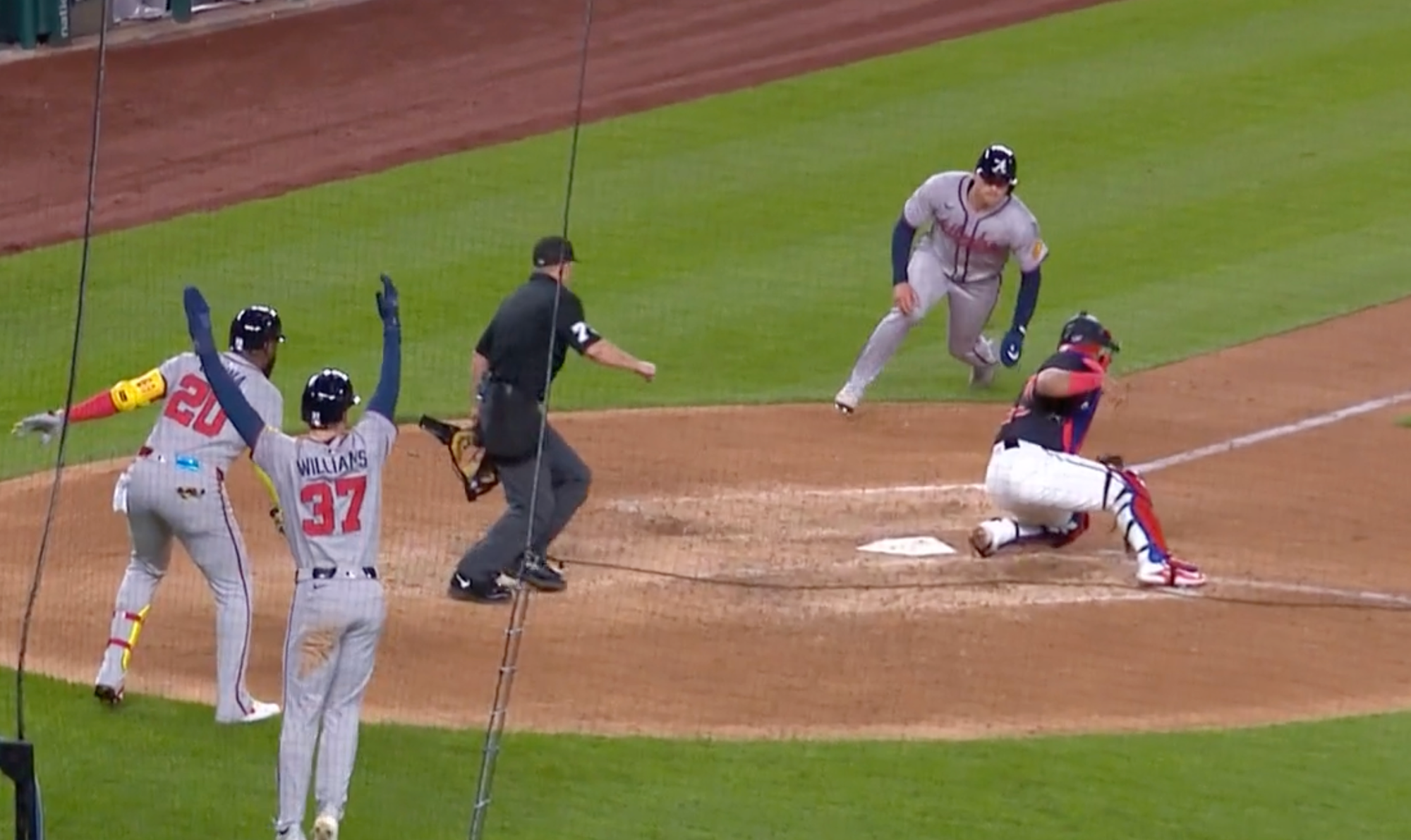
And, in a split-second decision featured in zero Tom Emanski fundamentals videos, try something weird.
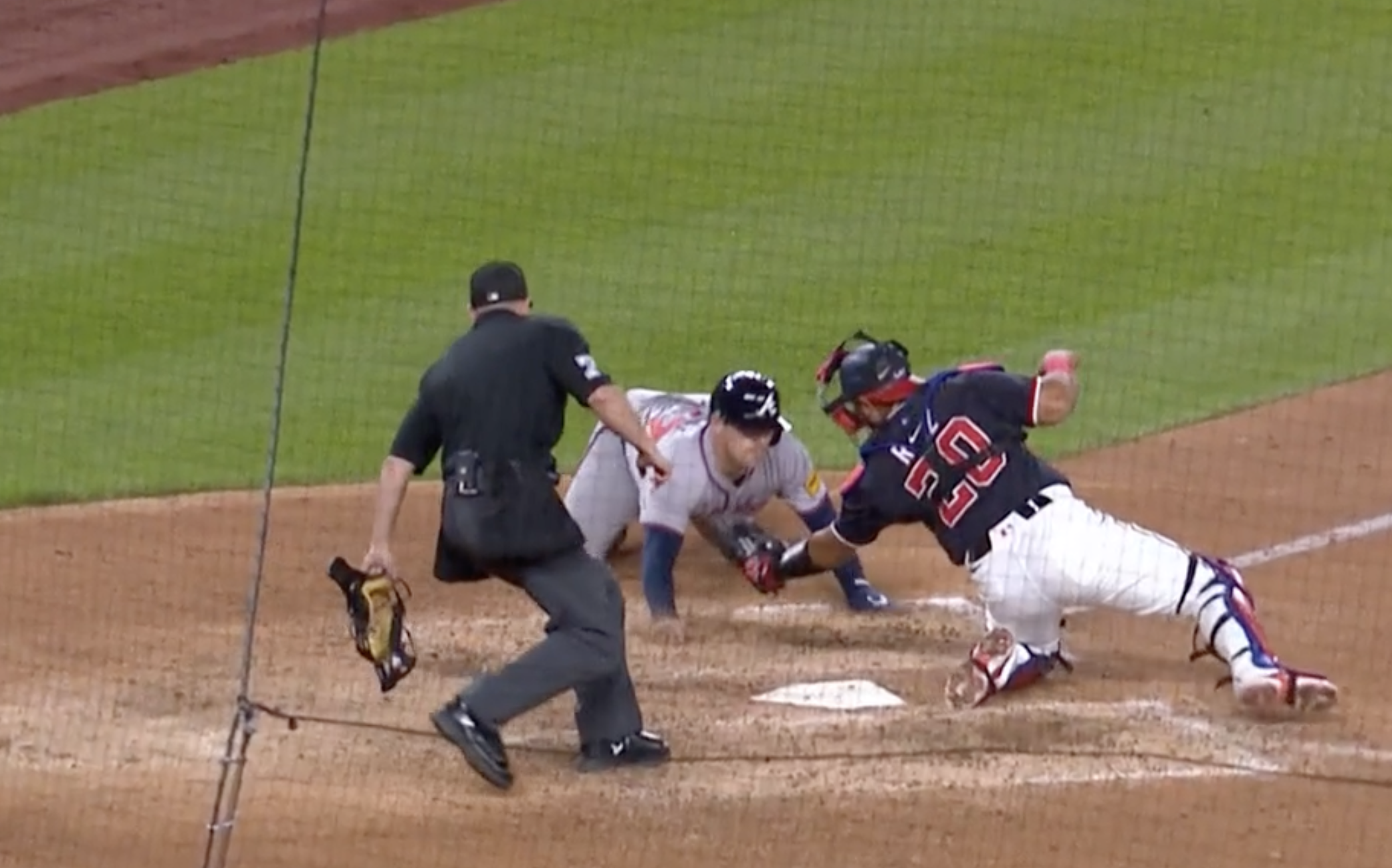
What I care about most in baseball is watching someone attempt something novel, depart from the paved path, venture into an unknown neighborhood and stride through a mysterious door. I don't think I'm alone in that.
Slides are high-stakes, unscript-able prompts for baseball players to act on instinct. They’re one beacon of impulse in a landscape of conditioned actions and responses.
In that way, in relation to my appreciation of every other play on the field, they are getting better. They’re inspiring more moments of suspense, more replays, more involuntary audible reactions. And I hope no one figures out how to prove or disprove their value anytime soon.
The part where I ask for your support
This is a project by and for the passionate. It's totally free to read, but it's far from free to create. If you enjoy the work here, please consider pledging your support. You can:
- Become a Fan for just $4 a month or $40 a year.
- Become a Diehard supporter for $8 a month or $75 a year.
- Offer a contribution in the amount of your choosing. (Perhaps $26 as part of The Bandwagon's pledge drive for '26?)
The Bullpen
⚾⚾⚾⚾⚾⚾⚾⚾⚾⚾⚾
Anyone watching spring training games has probably already noticed the almost comical level of detail in the automated ball-strike zone. Pitches are missing by tenths of an inch.
You’ll be either happy or annoyed to know that the attention to detail filters down to the setup. MLB players being measured to set their strike zones have their height gauged at a certain time of day to maintain consistency.
Why? “Because people shrink over the course of a day,” Brewers assistant GM Will Hudgins told MLB.com. “I’m not entirely sure how much, but I’ve been told that enough times to believe that it is scientifically true.”
⚾⚾⚾⚾⚾⚾⚾⚾⚾⚾⚾
Chicago Magazine published an in-depth profile of Pete Crow-Armstrong that finds the Cubs’ young, blazingly talented star in the throes of figuring out how to moderate and channel his admirable passion for the game. It plumbs the ways he wishes he could be better, and the ways people perhaps misunderstand how he carries himself.
But there’s also a line in there that has, in true social media fashion, overshadowed the larger point of the story.
“I love Chicago more and more,” Crow-Armstrong said in the story. “It’s just an incredible city. The people are great. They give a shit. They aren’t just baseball fans who go to the game like Dodgers fans to take pictures and whatever. They are paying attention. They care.”
[Long sigh.]
Pros: Content. Fuel for a rivalry if the Cubs rise up as a threat to the Dodgers.
Cons: We really don’t need to do the fan seriousness measuring contest, which is absolutely what is happening.
⚾⚾⚾⚾⚾⚾⚾⚾⚾⚾⚾
Good for Mariners first baseman Josh Naylor, who took a moment to greet Jen Pawol — who last season became the first woman to serve as an umpire in the majors — before she called his spring training at-bat. "It’s not hard to be inclusive and welcoming and happy,” he told Shannon Drayer. “I think it could change the world.”
⚾⚾⚾⚾⚾⚾⚾⚾⚾⚾⚾
The World Baseball Classic starts Wednesday night in Japan, with all the teams set to begin play by the end of the weekend. Team USA opens Friday night with Brazil. We don’t know how the pitching lines up just yet, but don’t wait until the knockout round to tune in. Bob Nightengale reports Tigers ace Tarik Skubal will pitch relatively early on, as will Logan Webb, Nolan McLean and Paul Skenes.
Skubal, however, is only going to pitch once.
Tarik Skubal said today he will make only one start for Team USA in the World Baseball Classic before returning to Tigers camp.
— Cody Stavenhagen (@CodyStavenhagen) February 23, 2026
"If they go to the finals, I think I'm going to try and lobby to just go watch and be with the guys," he said.
For a fun sleeper, maybe check out Team Italy. They’ll be boasting some interesting young talent in the lineup, with the Royals duo of Vinnie Pasquantino and Jac Caglianone, plus breakout Marlins outfielder Jakob Marsee.
⚾⚾⚾⚾⚾⚾⚾⚾⚾⚾⚾
Thanks to everyone who contributed to the Bandwagon Beat Writer Database.
It’s basic, but organized. Go through and find yourself some well-sourced new follows. And keep adding if we’re missing someone.