Hope arbitrage
The Tarik Skubal trade and the baseball business

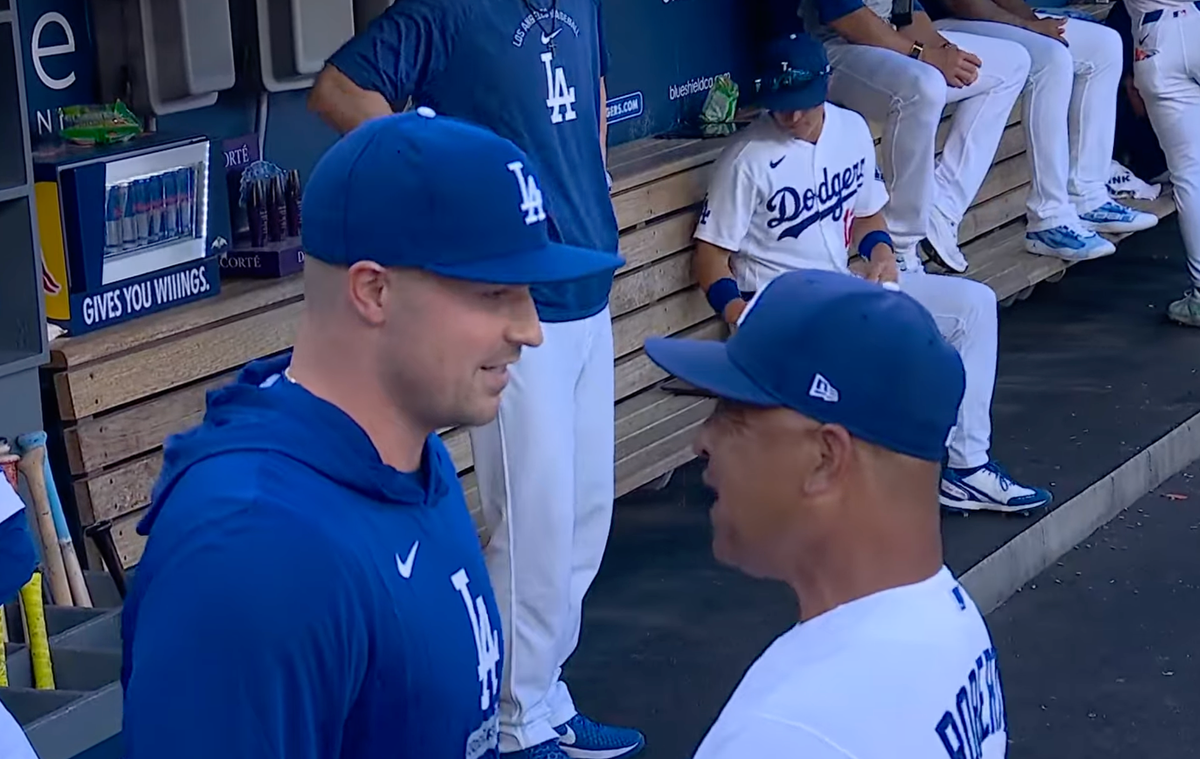
The Los Angeles Dodgers traded for Tarik Skubal. The Detroit Tigers traded away their 2-time Cy Young winner, who will hit free agency at season’s end, for prospects Zyhir Hope, River Ryan and Brady Smith.
The deal broke late Saturday night and the early morning hours sent angry, exasperated fans into overdrive. The prevailing sentiment, again, goes that the Dodgers’ propensity for acquiring top talent is unfair.
Frustration reigns. Dead-eyed stares focus on what others can have and they seemingly cannot. That feeling — of being small, of being shut out of opportunity or last in line through no apparent fault of your own — cuts deep. It opens cracks for volcanic reactions to reach the surface, often directed at the closest parties, not necessarily the most responsible.
So in this case, there is ire directed at the Dodgers, and there is ire directed at MLB’s current economic system. And there is some ire directed at the teams that didn’t outbid the Dodgers. There’s ire that sloshes around, mixes and morphs and hardens into conspiracy theories that then become targets of ire themselves.
Baseball fans outside of Los Angeles want to break things, to fight, to make something go differently. And yet it feels like every time there’s been something worth fighting for recently, the Dodgers have strolled right up and taken it with little resistance.
Most of those fans, though, are experiencing disorienting effects from choices made by their own would-be representatives, their avatars in the arena, their teams.
⚾️⚾️⚾️
Let’s talk about exactly what happened in this trade for a moment.
The Tigers were 2.5 games out of a postseason spot, with reason to think they might chase one down, when they sent away Skubal. Since a 6-22 May tailspin kneecapped their expected status atop the AL Central, the Tigers are 32-20. Even at 54-58, their run differential is more fitting of a 63-49 team, third best in the American League. Their postseason odds were about one in four.
They had to weight that against the three hypothetical stretch runs out of four where Skubal simply reaches free agency without leading a postseason quest, against their willingness to pay what it would take to keep such an ace long-term, and against the players they could acquire in his stead.
Tigers president of baseball operations Scott Harris, who rose up under Theo Epstein and then worked as a GM under Farhan Zaidi, chose to move him.
In return, Detroit brought back what is likely the most highly valued prospect haul for a rental player in a decade, since the 2016 Cubs shipped Gleyber Torres to the Yankees for Aroldis Chapman.
- Hope, the 21-year-old power-hitting corner outfielder, was the No. 20 overall prospect in baseball on the Baseball Prospectus midseason list. At FanGraphs, he checks in at No. 57 overall.
- Ryan, who both converted to pitching in pro ball and has been waylaid by a barrage of injuries, is almost 28 years old but nonetheless viewed as an imminently helpful starting pitcher. FanGraphs ranks him the No. 22 overall prospect in baseball.
- Smith is a talented but far away pitcher who might turn into a No. 3.
In Detroit's internal models, it's possible one or both of Hope and Smith are elite minor-league talents, perhaps accounting for the rush to complete the deal instead of waiting for Monday's deadline.
The precise rankings and individual evaluations and negotiation machinations are not as important as the thrust of the thing. These are highly coveted young players, whom the Tigers will have control over for six seasons each, whom the Dodgers decided to give up for Skubal’s potential contribution in their pursuit of a third straight World Series crown.
The 2024 Tigers defied 0.2% playoff odds. The 2025 Tigers blew a 15.5-game division lead. The 2026 Tigers, with a much more normal sequence of events, could make a playoff run. And, to be clear, still could. But the front office has made its viewpoint clear. It chose future Hope over 2026 hope.
⚾️⚾️⚾️
There’s a story about how a young Warren Buffett learned to make money as a schoolboy. In the summer, the budding businessman would buy six-packs of Coca-Cola from the grocery store his grandfather owned, 25 cents a pack, and then sell each bottle for 5 cents a pop. This is a basic form of arbitrage. You buy something in one market, sell it in another. Different conditions create the opportunity to set a different price and profit.