The Faces of Baseball
All-Star voting, Ernie Clement and Shohei Ohtani

Last we heard, two players had already accumulated more than 2 million fan votes in MLB’s initial round of balloting to start the All-Star Game — one from the AL, one from the NL, clear leaders ahead of the pack.
That update came Monday, and when the opening round ends at noon today, the single top vote-getters among AL and NL players will be anointed the first official All-Stars of 2026, while everyone else goes into a second round to decide starters at the rest of the positions.
Those leaders were Shohei Ohtani, the beloved baseball god walking among us, and Ernie Clement, a slingshot darling who might as well be any player, might as well be you.
⚾️⚾️⚾️
Fan voting produces volatile results. Less scientific rigor doesn’t make those results true, it just measures the truth in a profoundly ephemeral way.
Baseball has accidentally captured the enthusiasms of its observers several times. In 1957, the commissioner stepped in when Reds fans voted seven of their players into the NL lineup. In the winter before the 2014 season, a whimsical surge of support for bespectacled A’s second baseman Eric Sogard carried #NerdPower to the cusp of being named “The Face of MLB,” in an MLB Network fan vote contest. (David Wright won instead, and some claimed those scales were tipped, too.)
In 2015, the summer after rising up to snatch the AL pennant but falling short in the World Series, Kansas City Royals fans blitzed the All-Star voting. At one juncture, Omar Infante was both the worst-hitting lineup regular in baseball and also the leader to start at second base for the AL. Was Infante the most deserving All-Star? No (and he didn’t wind up making it), but Royals fans were the most invigorated, the people most present in the story of baseball at that moment. As Jeff Passan wrote at the time:
Do not dare call this a travesty. It is a triumph of the people. And whether it's real people who are voting for the 35 allowed times from one email address and then creating another for 35 more and doing so ad nauseam, or a person taking the time and computer know-how to try and hoodwink MLB.com – the largest tech company in all of New York, run by brilliant minds who say they've rallied their collective nerdery to detect such things – this is an effort that, in truth, is mutually beneficial.
The voting was maybe intended to decide that Jose Altuve was a better, more exciting second baseman than Infante, but it instead proved that the Royals had released a chain reaction more potent than any one player’s stat line. The question was about second basemen in 2015; the answer was about something bigger.
⚾️⚾️⚾️
Here’s Ernie Clement’s face.

He could be Bryce Harper’s little brother, or Dansby Swanson’s scrappy cousin. You can’t necessarily tell from the picture, but if you watch him play you’ll know he stands 6-foot-nothing, probably more than his listed 170 pounds, but not by much.
He’s 30 years old, in his third season as a lineup regular, blooming in Toronto after a series of unsuccessful stabs at becoming a utility type with Cleveland, who drafted him in the fourth round back in 2017, and a brief sojourn with the A’s.
Clement is batting a spiffy .293. He barely strikes out and barely walks. He swings and can usually hit it, which makes for a fun, aggressive profile at the plate. If you dig into it much, it’s not a stat line that screams All-Star. His on-base percentage is only .314, though seven homers help him register a 107 wRC+. By Wins Above Replacement, he’s fifth among AL second basemen. Yet there’s no slam dunk choice in the bunch — Jazz Chisholm Jr. and Ezequiel Duran are probably the best choices by production — and even among casual fans Clement has a halo effect going for him.
Because last October, he batted .411. He slapped, rapped, ripped, lined and doinked 30 hits in the postseason, setting a new single-season record in the Blue Jays’ run to within an inch of a championship.
⚾️⚾️⚾️
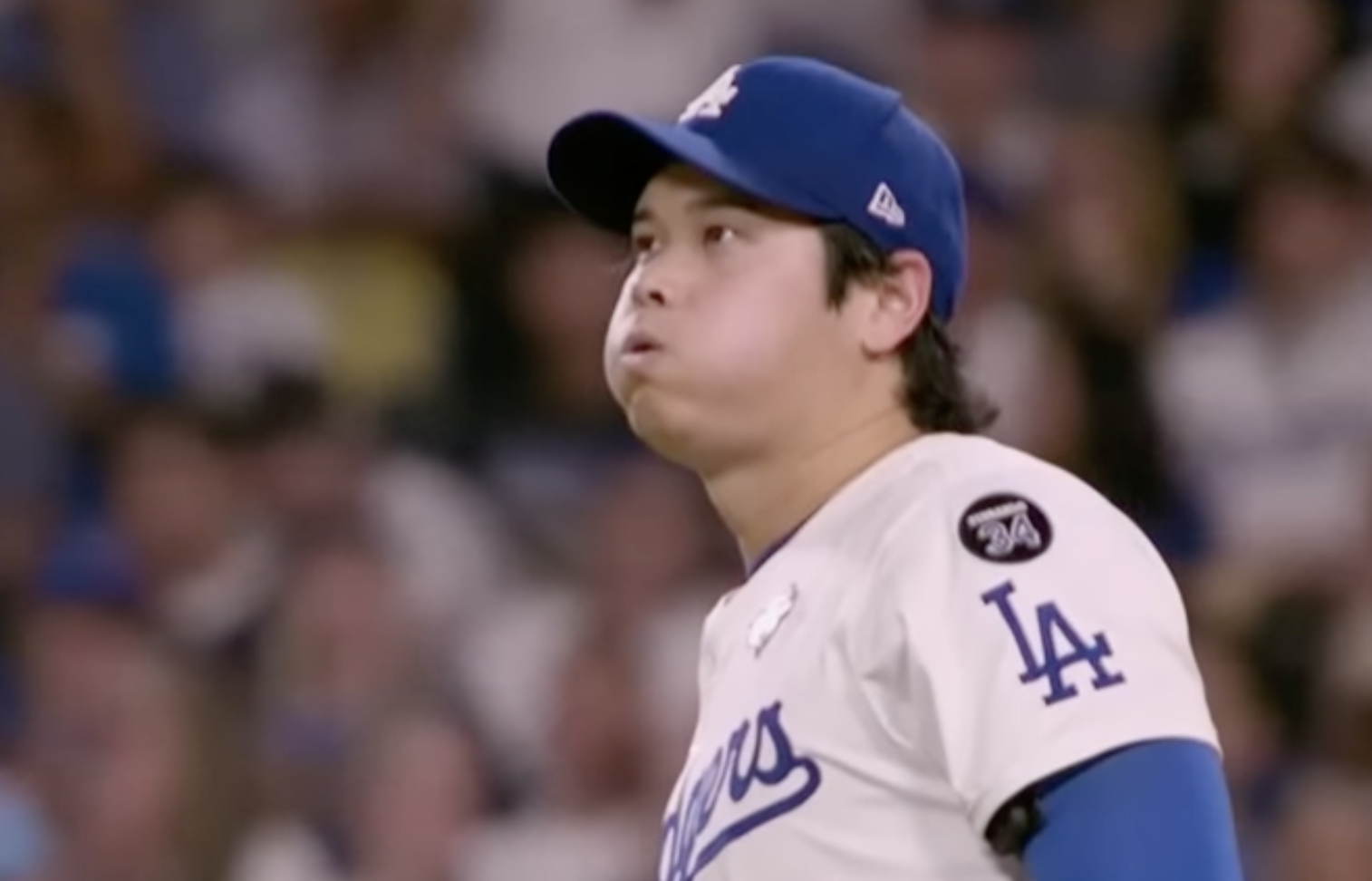
Here’s Shohei Ohtani’s face.
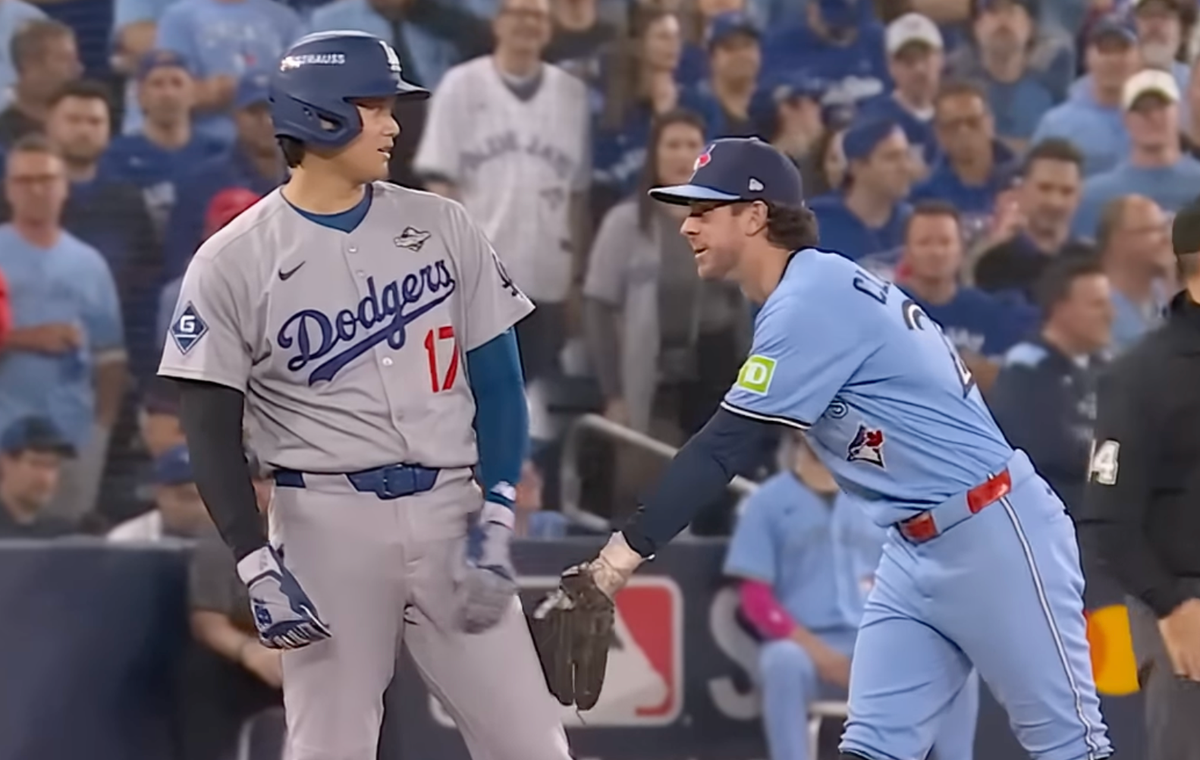
Right after Clement smoked an opposite-field double into the gap in the seventh inning of World Series Game 4, signaling the end of his outing on the mound. The camera followed Ohtani everywhere. In one of the great World Series dramas of all time, he was the main character. Unprecedented, historic, a trailblazer for a path of baseball greatness that perhaps no one else will ever be able to follow. A king finally crowned with the Dodgers, a what-could-have-been who was not on that plane to Toronto.
Ohtani expresses himself constantly, with his face. That was him having given his all, a night after the 18-inning marathon, with a tied series and the possibility of defeat creeping up in his story, with the unlikely pest Clement bobbing around on second base.
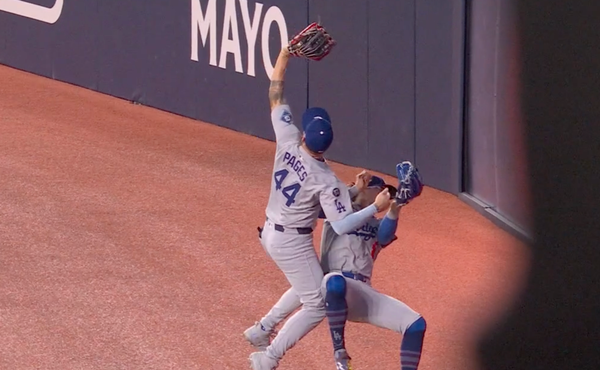
Clement also got Ohtani for a stress-inducing single in Game 7. That was after he had gotten to Cam Schlittler in the ALDS when it seemed no one could, and before he crushed a loping Yoshinobu Yamamoto curveball through based-loaded tension in the bottom of the ninth. It flew to the wall, where it would have gilded his name alongside Bill Mazeroski, Joe Carter and Luis Gonzalez, had Dodgers center fielder Andy Pages not trucked his teammate and made the catch. Where it would have made Ernie Clement baseball’s main character, over even Ohtani, for at least one night.
⚾️⚾️⚾️
What players deserve, by their statistical performances and by the standards of awards voting and arbitration and the free agent market and Hall of Fame balloting, is important. There is a huge amount of research and record-keeping and discourse devoted to deciphering a player’s contributions and earning power and, eventually, his significance.
What players mean to fans can’t be studied that directly. It dissolves under a microscope.
Sports are the original reality show, and if reality TV proves anything, it's that who we cheer for doesn't line up with achievement. We want the awe of Ohtani, but our enjoyment is amplified by the inkling that a particularly motivated normal-looking guy could overcome the obvious greatness gap and win.
We want significance, but we also want relatability. We want Goliath, but we really, really want to see David knock him down sometimes.
That’s some small part of why these voting situations sometimes take unexpected turns.
“It’s his style of play and his grittiness,” Blue Jays manager John Schneider recently said about Clement’s appeal. “He’s an open book with fans. He doesn’t really say no to people’s requests, whether he’s going good or going bad. He’s a likeable guy who got put on the stage in the postseason, and he’s carried it over. For a guy who we picked up off the waiver wire from Oakland a few years ago, to be here right now? It’s pretty cool.”
It is pretty cool.
In the most memorable moments of recent baseball history, Shohei Ohtani was there. And Ernie Clement was too. The people seem to like it that way.