Emotional labor

What attention do fans owe to baseball's early salary cap campaigning?

Share
Emotional labor

The cap is out of the bag.

Major League Baseball (representing the owners) and the MLBPA (representing the players) rolled out their initial proposals for the sport’s next collective bargaining agreement in recent weeks, with the owners making literal what has long been telegraphed. For the first time since the 1994 negotiation that led to a strike and the cancellation of the World Series, owners are asking for a salary cap.

MLB’s proposal calls for a $245.3 million cap and a $171.2 million floor, with what they would call a 50-50 revenue split in the first year of the deal. The union, meanwhile, touted their idea for a “competitive integrity tax”, which would operate as a soft salary floor to bracket the bottom tier of spenders like the Competitive Balance Tax penalizes the top spenders.

Battle lines are drawn, but there are a bevy of crucial details unaddressed, because this negotiation is six months (at least) from getting serious.

Even what we do know about the proposals requires serious comparative expertise to grasp the finer points and potential effects. Neither proposal will bear much resemblance to whatever both sides eventually agree on.

Nonetheless, the sides are sniping back and forth. MLB especially has launched a concerted campaign to tug fans toward the idea of a cap as a salve for competitive balance, to emotionally engage a huge swath of fans in the fight with a broad strokes argument that not-so-subtly positions the Dodgers' spending and success as a common enemy. Fan sentiment is referenced, spun and manipulated, even monitored by media outlets.

Pressed last week on the prospect of losing games to labor unrest, as MLB did in 1994 and 1995, commissioner Rob Manfred said, “We’re open to whatever ideas people have, but we need a realistic framework that addresses the fans’ concerns about competitive balance and you just can’t ignore that financial penalties have not gotten it done for us."

The implication is that the tides of public opinion are either important or interesting.
As much as some sort of baseball democracy would make for a fascinating showdown, in an era where at least portions of the discussion of labor issues have become more nuanced and more skeptical of the owners’ self-interested closed-book claims, fan takes on the matter are ultimately a river without a mill. There’s no lever for the actual fans’ actual thoughts to do anything.

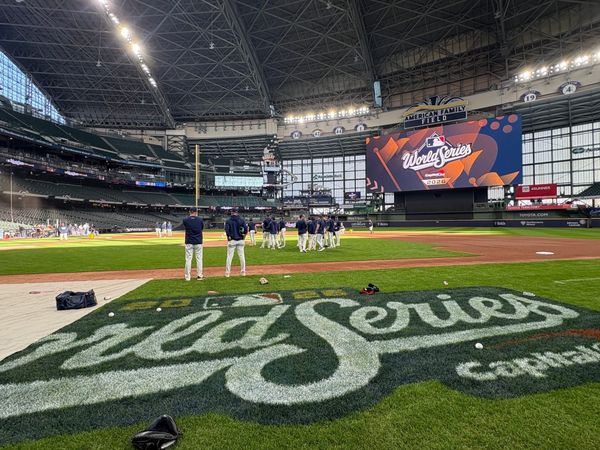
Fans don’t have a seat at that table or a stake in the discussions, per se. Fandom, like nature, abhors a vacuum. So there’s a temptation to paint the labor battle onto the game at large. Some might root for the Guardians-Brewers World Series to blow up MLB’s competitive balance narrative; others might whisper hopefully about a Dodgers three-peat, thinking it would deliver a salary cap and perhaps structurally require their team’s ownership group to behave more competitively. You can find folks reading labor implications into the trade deadline, contract decisions and more.

And I get it, the near-certain December lockout has been “looming” in headlines for a long time. This upcoming fight doesn’t need to be a dark cloud in the sky of your baseball season just yet, though. Sports fandom is at its best when you feel one with a larger team, a larger collective — when you contribute to a roar that rattles an opposing pitcher, or a standing ovation that lifts a slumping rookie.

Looking for a rooting interest in the labor clash is asking to be a pawn in someone else’s game. Probably a billionaire's.

Because here’s what’s going to happen: If the fans want a salary cap, the owners will pursue one because it would make them more money. If the fans don’t want a salary cap, the owners will pursue one because it would make them more money. The same gist, with inverse motivations, is true of the players, who are grizzled veterans of absorbing and weathering vitriol over their very public salaries to advocate for their value in a money-printing industry.

If you relish hashing it out about how the sport should operate, great! Jeff Passan has a good breakdown of why MLB’s proposed cap is even less amenable to players than versions already in place in the NFL, NBA and NHL. I’ve already spent a good amount of words on the posturing that promotes the idea of a salary cap, and why I don’t think the sport would benefit from one. Maybe you can convince some friends that adding "void years" or a "midlevel exception" into the lexicon would not actually represent a thrilling development. Your efforts at stating the case one way or the other aren't necessarily wasted on fellow fans, but they might bring you more grief than satisfaction.

If you just actually love following the negotiation machinations, more power to you, this is your golden age. It still stands to reason that Manfred and the owners, for all the money-clutching bluster, will eventually guard the glow of an energized sport to reap the benefits of new TV contracts in 2028 and kick their salary cap war down the road.

Assuming, however, that your favorite pastime doesn’t involve worrying about revenue, counteroffers or escrow accounts, don’t feel the need to force the gnashed teeth of the boardroom into the frame.

That’s a different game, one that can't really be played until baseball itself is the object. ⚾️

The Bandwagon is a labor of love, but it still needs your support. If you enjoy the work here, please consider pledging a contribution to keep the newsletter going strong.

The Bullpen

⚾⚾⚾⚾⚾⚾⚾⚾⚾⚾⚾

The Yankees are going to be without Aaron Judge for a while because of what was diagnosed … eventually … as a fractured rib. But for the first time in a while, they look prepared to weather that.

Thus far in 2026, by FanGraphs’ estimation, Ben Rice and Cody Bellinger have already been matching Judge’s production. Throw in a resurgent Trent Grisham, a hot Paul Goldschmidt and a stacked starting rotation and the guys in pinstripes look well-positioned to hold serve while Judge recovers.

Locked in a virtual tie atop the AL East with the Tampa Bay Rays, FanGraphs playoff odds still give the Yankees a 71% chance to win the division. And New York City only sort of cares because …

⚾⚾⚾⚾⚾⚾⚾⚾⚾⚾⚾

The Knicks are leading the Spurs, 2-1, in the NBA Finals, and New York is in a frenzy. I know this is a baseball newsletter, but it’s also a fandom newsletter, and we can’t skip the fandemonium engulfing the city. The Knicks, who haven’t won an NBA title since 1973 and hadn’t lost a game since April before Monday, are inspiring something approaching 2016 Cubs levels of buzz around town.

As Hannah wrote for CNN, longtime fans are scrambling to return to New York — even from sojourns in Albania! — just to be around the energy this week, not even attend the games.

I can’t say I watch basketball with any regularity, but I’ve been planning evenings around the Knicks’ run. Last night’s Game 3 felt like an impromptu Super Bowl in my neighborhood (and certainly for the poor guys working at the wing shop I ordered food from). Scenes like this dotted the streets.

Credit to Juliet Shen on Bluesky

It starts as a communal will to watch the same thing together, but captured in a moment of reflection it turns into a sort of art, the type that can add the goosebump-inducing texture to history. When I first saw that image, I thought of the 1986 Mets run, or the Shot Heard Round the World or Joe DiMaggio’s hitting streak. And then realized it was the current moment in New York.

Watching your town, adopted or lifelong or newly embraced, reach a long-awaited pinnacle is what sports are for. It might even be what cities are for.

⚾⚾⚾⚾⚾⚾⚾⚾⚾⚾⚾

Bonus Knicks-related story: I thought this piece about color-coordinated arena T-shirt giveaways was fun.

San Antonio and other arenas often blanket their stands in a pattern via the free T-shirts, but the tactic simply doesn’t work in New York’s Madison Square Garden, where individual outfits are a huge part of expressing one’s fandom.

⚾⚾⚾⚾⚾⚾⚾⚾⚾⚾⚾

While we’re on other sports, the World Cup is soon. There are a lot of things about the tournament — hosted by the U.S., Canada and Mexico — that will land somewhere between annoying and reprehensible, but the players and the games and the drama of the passion ignited by them is really, really difficult to ruin even with a nightmare blunt rotation of FIFA and the current American government.

So, if you want to focus on getting ready to enjoy the good part, The Guardian has a delightful, addictive guide to every team and player in the tournament that nicely splits the difference between reminding (or informing) you who the most important players are and highlighting some fun, rootable quirks.

⚾⚾⚾⚾⚾⚾⚾⚾⚾⚾⚾

Things are very weird with the Cubs.

They are 15-21 since the calendar flipped to May, and everything has been topsy-turvy. Players who looked great in April have hit the skids hard. Sluggish starters are surging. But the bad is outweighing the good.

Pete Crow-Armstrong and Michael Busch, who got off to slow starts, are blazing hot. But Alex Bregman, Seiya Suzuki, Nico Hoerner and Dansby Swanson all have wRC+ marks below 80. Swanson’s .150/.222/.215 line since May 1 has been borderline unplayable, and it looks like manager Craig Counsell finally decided to give him a break.

The pitching staff, somehow, has had a version of the same thing happen. Strapping pitcher Ben Brown’s fitful adjustment to the majors suddenly clicked, and he has been a top 10 starter in baseball over that span. Unfortunately, the more established core of the rotation has tanked. Edward Cabrera, Shota Imanaga and Jameson Taillon have all been among the 10 least valuable starters since May.

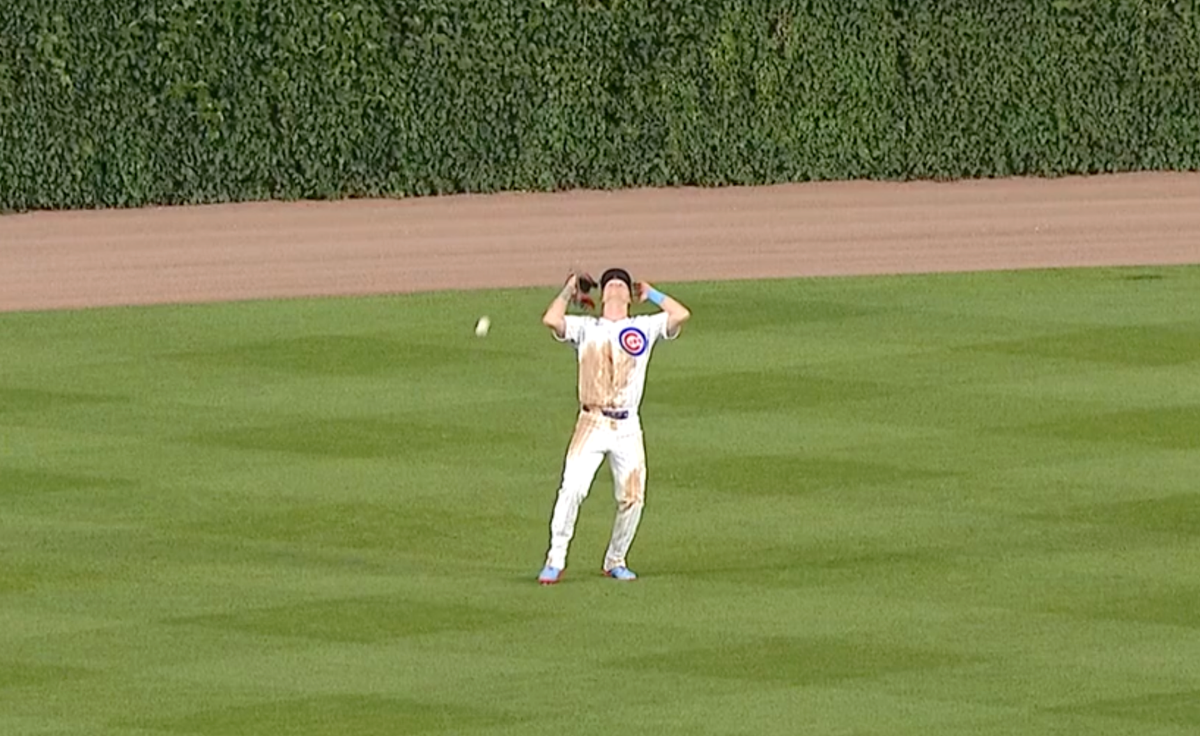
Even in a win, Crow-Armstrong had this happen …

0:00
/0:23

via MLB.com

… before homering and then logging a walk-off hit.

I presume usual levels of competitive physics will be restored to Wrigley Field soon.

⚾⚾⚾⚾⚾⚾⚾⚾⚾⚾⚾

Meanwhile, on the South Side of Chicago, the White Sox are levitating. They are four games over .500, and last night they beat the Braves in a finish straight out of a dream sequence.

Braden Montgomery, a former first-round pick acquired in the Garrett Crochet trade, closed out his MLB debut by slashing a walk-off home run against notoriously homer-proof closer Raisel Iglesias. Iglesias hadn't allowed a long ball since July 19, 2025. The great Sarah Langs and the Elias Sports Bureau found that Montgomery was only the fifth player in MLB history to lace a walk-off in his debut, and the first since Carlos Perez in 2015.

As a bonus, the White Sox broadcast was doing 80s throwback night with Bob Costas in the booth and the graphics package in sepia toned Game Show Network goggles.

⚾⚾⚾⚾⚾⚾⚾⚾⚾⚾⚾

Promising but oft-injured Twins infielder Royce Lewis got off to a rough start this year, got sent down to Triple-A, then mashed the minors so thoroughly Minnesota called him back to the majors. But that ho hum progression is just the setup for an Arrested Development-style subplot in the marketing departments of the two teams.

⚾⚾⚾⚾⚾⚾⚾⚾⚾⚾⚾

It’s time for another edition of Band Wagon. A trained poet and native Floridian by way of New Orleans, Thomas Dollbaum has my favorite new album. He mixes wayward, wild and sometimes mystical tales of his home state with muscular Southern rock, howling and harmonizing in ways that can evoke both My Morning Jacket and Magnolia Electric Co.

Contemporary alt-country talisman MJ Lenderman is all over this record, playing multiple instruments and lending backing vocals, but I like Dollbaum because he is thundering ahead in his own lane, creating huge highway-ready moments of build and release. I have been walking around for weeks trying to restrain myself from fist-pumping to Pulverize.

Give Coyote and Dozen Roses a spin while you’re at it.

Thanks for reading. If you have comments, questions, suggestions, or just want to say hello, you can always reach me by replying to this email or emailing HelloBandwagon@gmail.com.